Slate chips for landscaping in Green Hills, TN give garden beds, paths, and patios a textured, natural finish that holds up through Tennessee's humid summers and freeze-thaw winters. Homeowners here use it to replace high-maintenance mulch beds, finish walkways, or edge planting beds that later get accented with path lighting. This guide breaks down sizes, colors, real costs, and installation steps so you know exactly what to order and how much to budget.
What Are Slate Chips?
Slate chips are rough, angular pieces of natural slate stone that have been crushed and screened to a consistent size for landscaping use. Slate forms from fine-grained metamorphic rock, which gives these chippings their characteristic flat, layered shape and durable surface.
You may also see this product sold under other names: slate gravel, slate aggregate, or slate mulch. All three terms generally describe the same decorative slate material, just marketed slightly differently depending on the supplier.
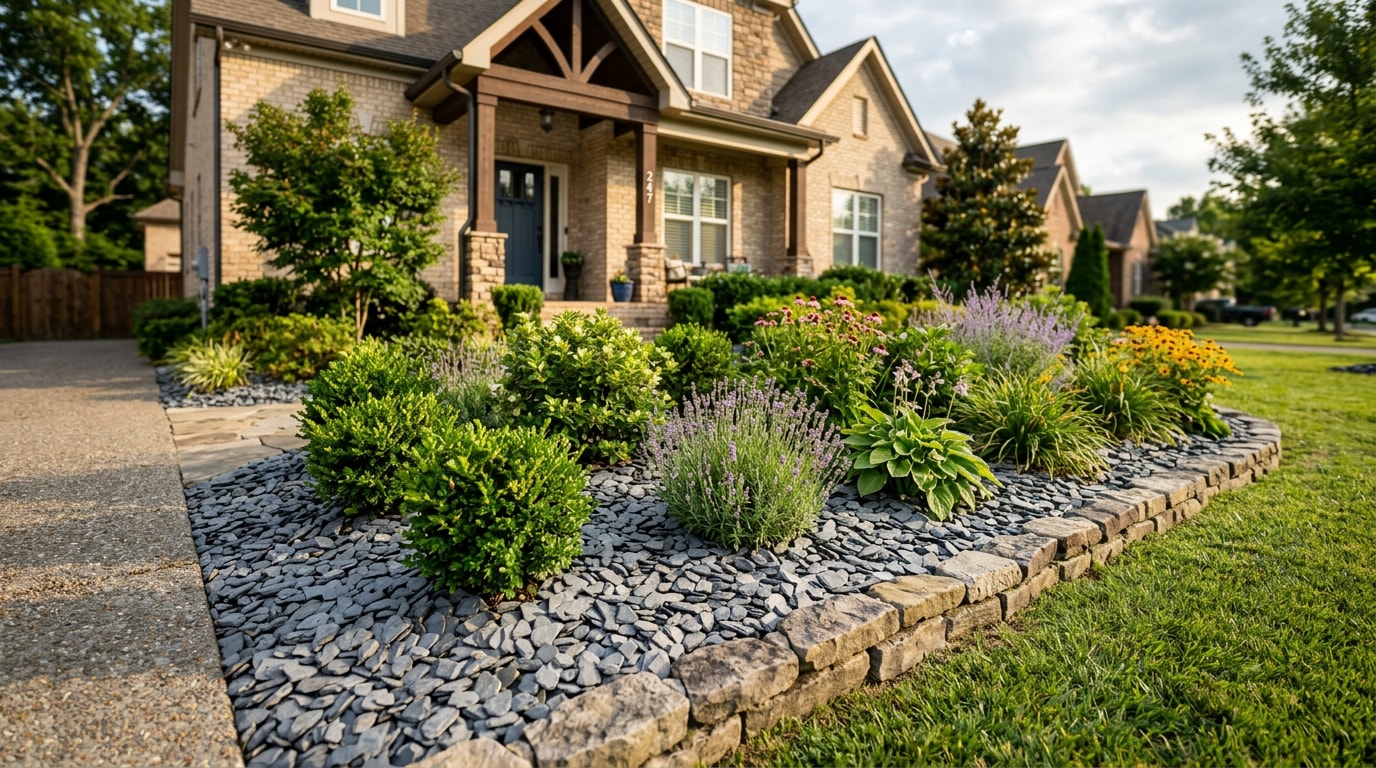
On the landscape lighting projects we wire across Green Hills, slate chip beds are one of the most common hardscape surfaces we work around, usually paired with path lights along a walkway or uplights tucked into a planting bed border.
Sizes and Colors of Slate Chips
Not all slate chips are created equal. Size and color both play a role in which type suits your project, whether you're filling a flower bed or finishing a walkway.
Slate chips typically come in three size categories:
- Small chips (about ¼ to ½ inch) for garden beds and potted plants
- Mid-size chips (roughly ¾ to 1 inch), the most popular choice for paths and patios
- Larger chips (1.5 inches and up) used for bolder accents or water feature borders
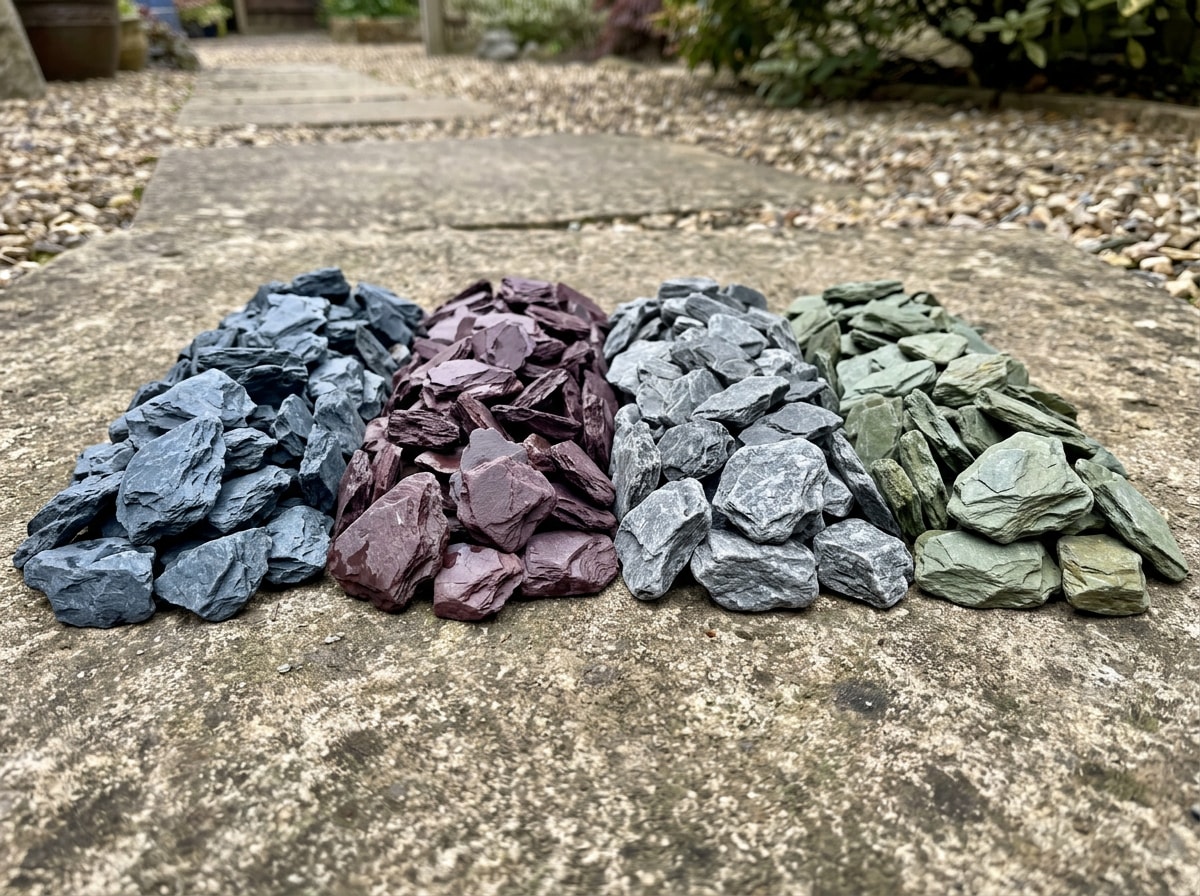
Color matters just as much as size when picking slate for a project. Blue slate offers a cool, modern contrast against greenery and light-colored homes, while plum slate brings warmer, reddish-purple undertones that pair well with brick exteriors. Gray slate chips remain the most versatile and widely stocked option, and green-toned slate is available from select suppliers for a more muted, natural palette.
How Much Do Slate Chips Cost?
Slate chip pricing varies by color, size, and supplier, but it generally runs higher than basic gravel in exchange for better looks and longer-lasting durability. Based on typical regional pricing for bulk decorative stone, homeowners in the Nashville and Green Hills area can generally expect somewhere in the range of $150 to $350 per ton for bulk slate, or roughly $45 to $75 per cubic yard depending on color and size. Specialty colors like blue or plum usually sit at the higher end of that range.
Bagged slate from retail garden centers tends to cost more per pound than buying bulk, since you're paying for packaging and smaller-batch handling. If you're covering a sizable bed, path, or patio area, buying bulk slate chips almost always works out cheaper per square foot.
Where to Use Slate Chips (Best Applications)
Slate chips work well in several outdoor settings, but they shine most in low-to-moderate traffic areas. Popular applications include:
- Light-traffic decorative driveways
- Rockery accents and water feature borders
- Edging around lawns or raised planters
- Walkways and patio fill
At common installation sizes, slate feels reasonably comfortable underfoot, and its layered texture gives a more refined finish than plain gravel. This makes it a strong fit for slate chip pathways, a slate chip patio, or garden beds where appearance matters as much as function. It also holds up nicely as landscape edging, creating a clean visual break between lawn and planting areas.
That said, slate chips aren't the right choice everywhere. They're a poor fit for heavy vehicle driveways, where repeated weight can grind pieces down, and they're not ideal for barefoot play areas since the angular edges can be uncomfortable underfoot.
A slate path or bed also happens to be one of the easiest hardscape features to light well. If you're planning a new walkway, our landscape lighting design team can map fixture placement before the stone even goes down.
Pros and Cons of Slate Chips
Weighing the pros and cons side by side makes the decision easier than sorting through scattered bullet points.
| Factor | Slate Chips | Notes |
|---|---|---|
| Cost | Higher upfront | More expensive than basic gravel, but the look often justifies it |
| Durability | Very high | Resists cracking and weathering over many years |
| Comfort underfoot | Moderate | Flat but angular; fine for paths, less ideal for bare feet |
| Drainage | Excellent | Loose fill allows water to pass through rather than pool |
| Maintenance | Low | Occasional rinsing and periodic topping up is usually enough |
Beyond the table, slate chips are genuinely low-maintenance, and their drainage performance makes them a smart pick for wetter yards. Mulch covers the soil and prevents crusting, compaction, and water evaporation, and mulching around trees, shrubs, and in flower beds can result in a ten-fold reduction in evaporative water loss from soil , a benefit that applies to inorganic mulches like slate as well. After two or three seasons in Middle Tennessee's freeze-thaw cycles and summer humidity, slate chips generally hold their color and shape better than wood mulch, which breaks down and needs frequent replacement. Some settling is normal, but the stone itself doesn't rot or fade from moisture exposure.
Slate Chips vs. Gravel vs. Crushed Stone
Choosing between slate chips, gravel, or crushed stone comes down to look, texture, and how the area gets used. Slate has a layered, slightly glossy surface and produces very little dust. Gravel is rounder, often dustier when dry, and tends to shift more underfoot, while crushed stone has sharper, more irregular edges that can be rougher to walk on.
Slate reads as more refined and modern, while crushed stone feels more utilitarian and is typically cheaper. Geologically, slate is "a compact, fine-grained metamorphic rock that possesses slaty cleavage and hence can be split into slabs and thin plates," according to the U.S. Geological Survey, which explains its naturally flat, cleaving structure compared to the more randomly fractured shapes of gravel and crushed stone.
There's no single "best" answer for this comparison. It depends on your budget, the traffic the area sees, and the style you're going for.
Installation Tips for Slate Chips
Installing slate chips isn't complicated, but a little prep work makes a big difference in how the finished project looks and how long it lasts.
Step-by-step installation:
- Clear away dead grass, weeds, and debris, then rake the area level.
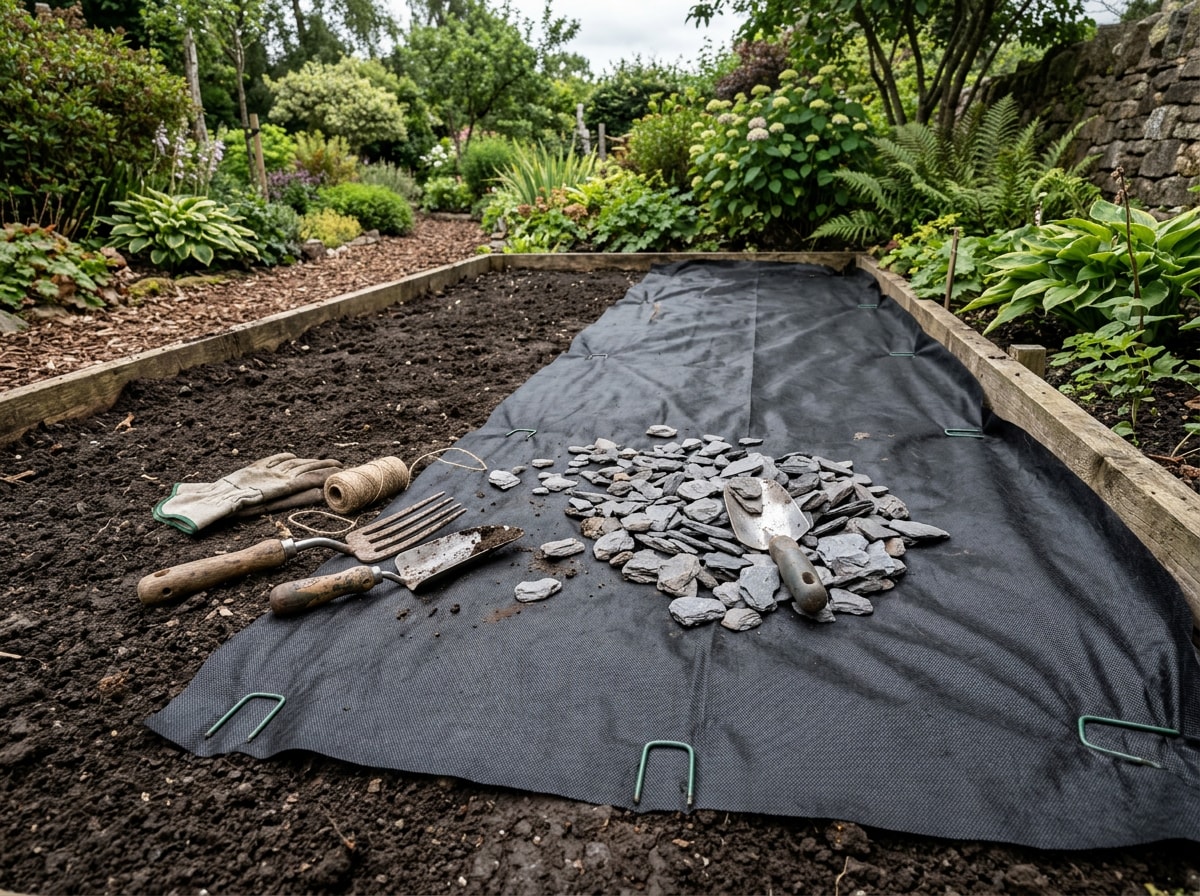
- Install a weed barrier or landscape fabric underneath the chips.
If using rock mulch, it's worth placing a landscape fabric underneath it , a step confirmed by University of California's IPM program for keeping rock mulch beds weed-free over time.
- Spread the slate to an appropriate depth. For garden beds and borders, about 2 inches is usually enough.
- For driveways and heavier-use paths, go deeper, often 3 to 4 inches, to handle foot and light vehicle traffic without the base soil showing through.
Even a thin layer of gravel mulch has been shown to double the amount of precipitation that infiltrates the soil, though stones must be small enough, no more than around a half-inch in diameter, to function as mulch rather than just decorative cover in planting beds, according to Colorado State University Extension research on mulching.
Maintenance Tips for Slate Chips
Keeping slate chips looking sharp doesn't take much effort.
- Brush or rake through the surface periodically to clear leaves and debris.
- Hose down or pressure wash occasionally to remove dirt, pollen, or algae buildup.
- Top up with a fresh layer every couple of years in high-traffic or sloped spots where chips scatter.
This kind of light maintenance is far less demanding than reseeding grass or replacing wood mulch annually.
Where to Buy Slate Chips in Bulk Near Green Hills
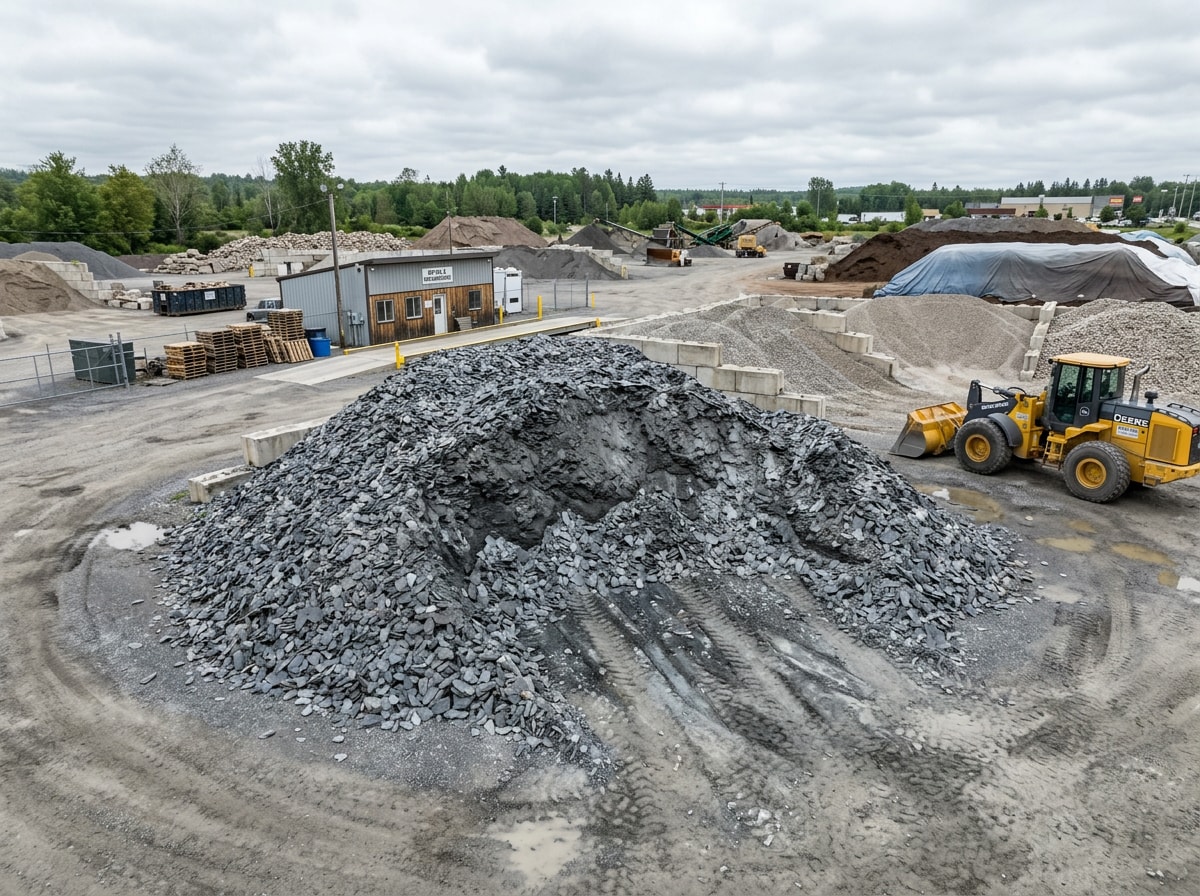
Buying bulk slate chips directly from a local supplier typically beats small bagged retail options on price, color variety, and delivery speed. When you're comparing yards, look for a delivery radius that actually covers Green Hills, reasonable minimum order requirements for residential projects, and flexibility between pickup and delivery depending on your timeline. Some yards offer same-week delivery for standard gray or black colors, while specialty shades like plum slate may need a short lead time.
Once the stone is down, the finishing touch most homeowners skip is lighting. A low-profile path light or well light along a new slate walkway turns a daytime landscaping upgrade into something that looks just as good after dark. We serve Green Hills, TN along with Belle Meade, Brentwood, and the rest of Middle Tennessee, and you can browse our completed projects for ideas on pairing stone beds with accent lighting. If you're also planning the plant beds themselves, our front garden landscaping guide for Green Hills covers layout and planting choices that work well alongside a slate border.
This guide was put together by the landscape lighting design team at HomeLight Nashville, who install and maintain outdoor lighting systems across Green Hills, Belle Meade, and the greater Nashville area. We see slate hardscaping up close on a regular basis while planning fixture layouts, even though installing the stone itself isn't a service we provide directly. If you want lighting mapped out for a new slate bed, path, or patio, get a free estimate and we'll walk the site with you.
FAQ
Are slate chips good for drainage?
Yes. When installed properly over a prepared base, slate chips allow water to pass through freely instead of pooling on the surface, which helps reduce standing water and improves overall yard drainage.
Do slate chips discolor over time?
Slate is naturally colorfast and weather-resistant, so significant discoloration isn't typical. Colors can look slightly brighter after rain or a rinse, and may appear a touch more muted once fully dry.
Can I use slate chips near plants?
Yes. Used as mulch, slate chips help retain soil moisture, suppress weeds, and moderate soil temperature, all of which support healthier plant growth in garden beds.
What size slate chips should I use for a walkway?
Mid-size chips, roughly ¾ to 1 inch, are the most common choice for walkways and patios. They stay put better underfoot than small chips while still feeling comfortable to walk on.
Do I need landscape fabric under slate chips?
It's recommended in most cases. A weed barrier underneath keeps the stone from sinking into bare soil and cuts down on weeds pushing up through the chips over time.
Can I use black slate chips as mulch?
Yes, black slate chips work well as a mulch alternative. Pairing them with a weed barrier underneath gives the best long-term results and keeps maintenance low.