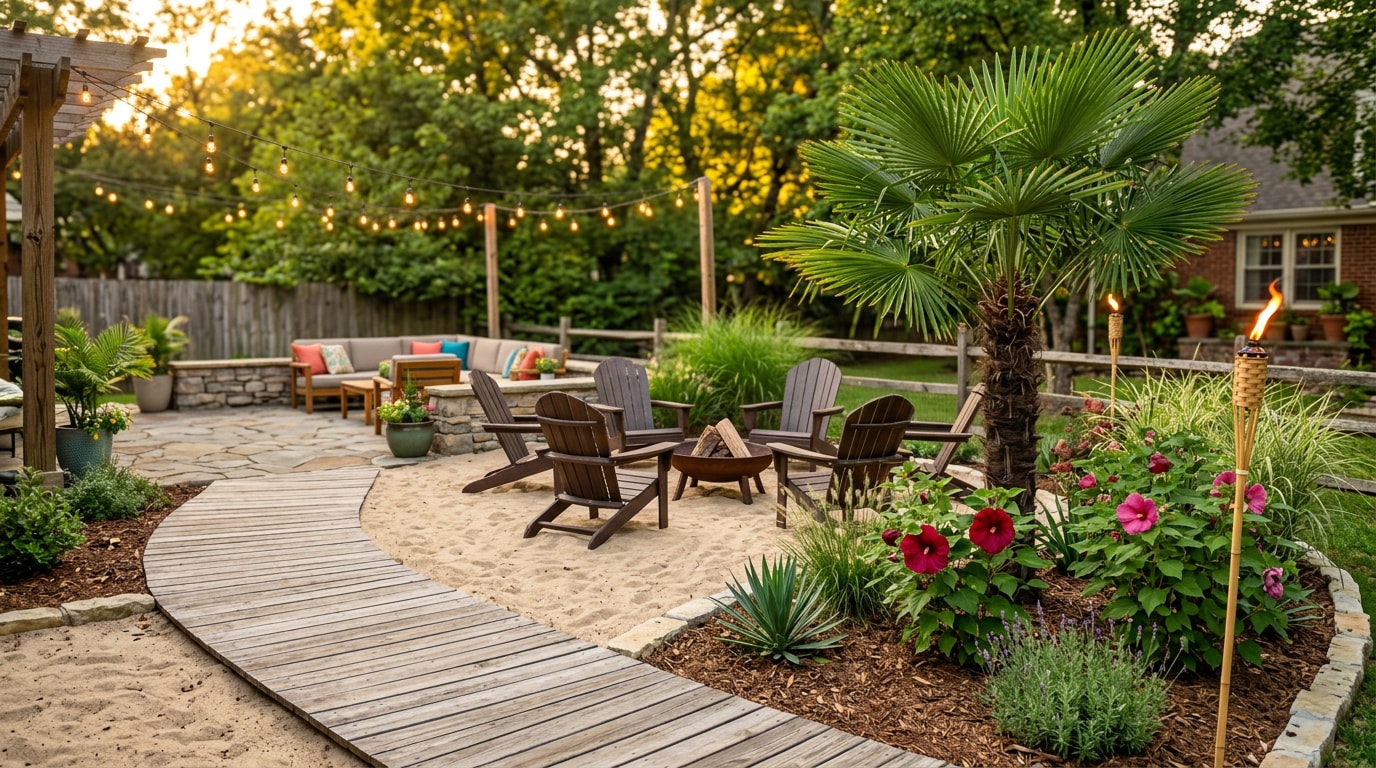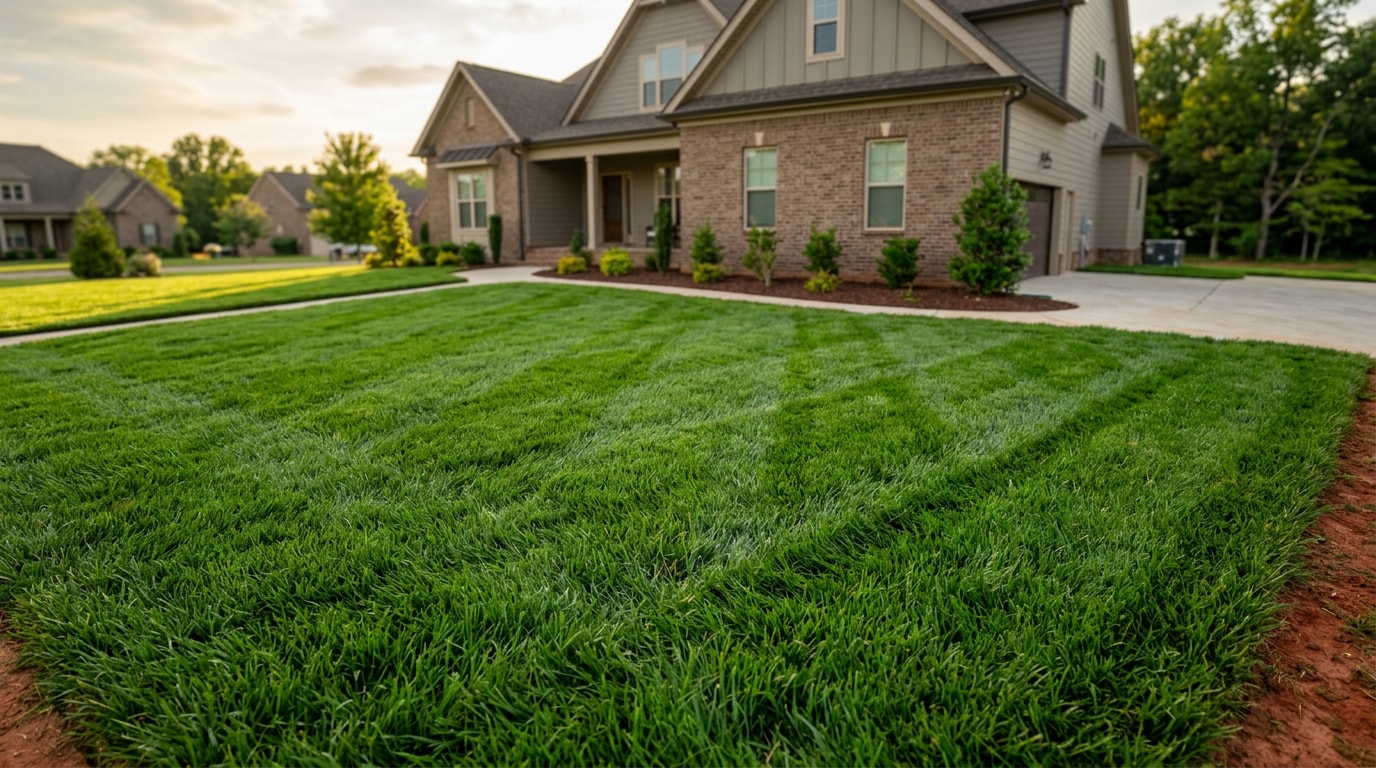
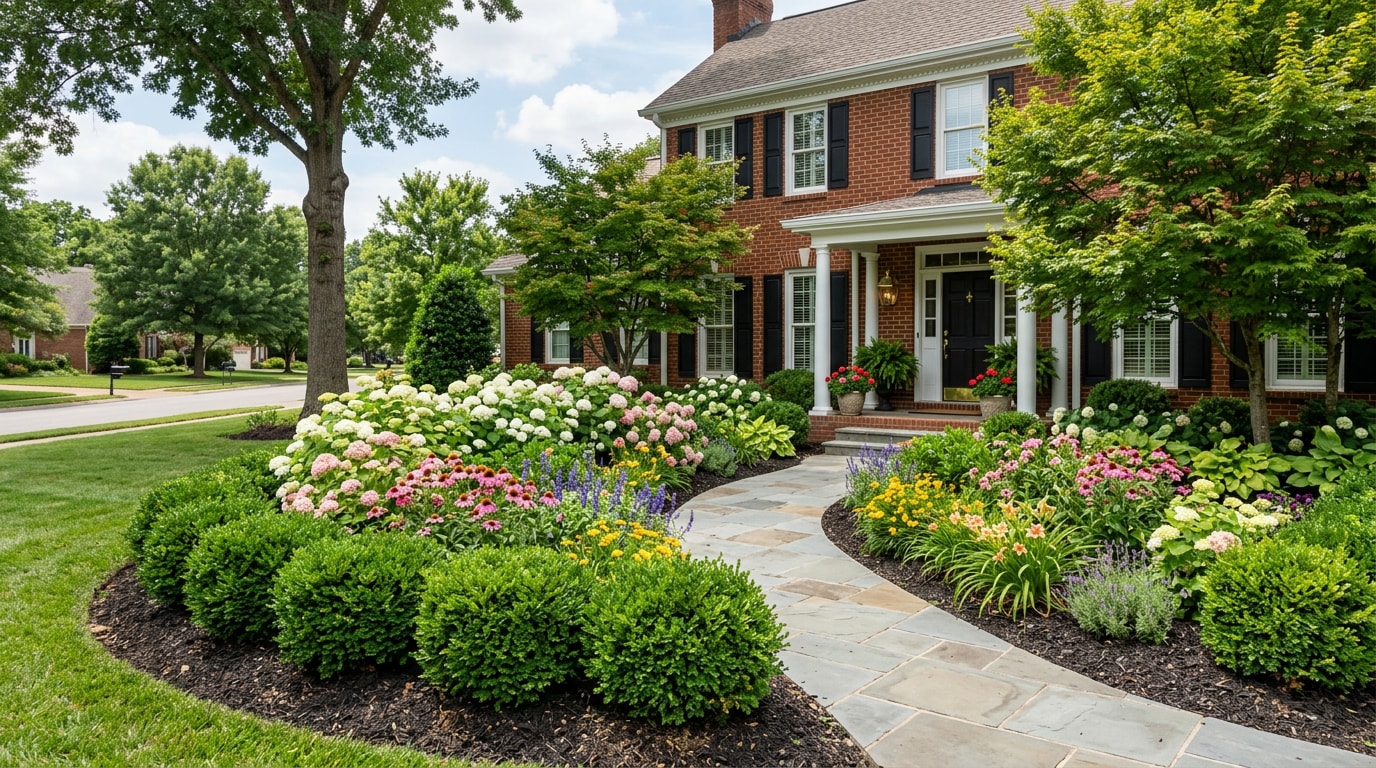
Front garden landscaping in Green Hills, TN starts with reading the lot, not the plant tag. Tight infill lots, mature tree canopy, and compacted construction soil all decide what actually survives here long before color schemes matter. Get the groundwork right first and the plant choices practically make themselves.
Why Front Garden Landscaping Matters in Green Hills, TN
Green Hills is one of Nashville's most walkable, tree-lined neighborhoods, and the front of a house carries real visual weight on these streets. A front garden does more than fill the beds near the porch. It shapes how a home reads from the sidewalk and often sets the tone before anyone reaches the door.
Our crews have worked on front gardens throughout Green Hills and neighboring Belle Meade, and the same handful of soil and layout problems show up on property after property. This guide covers what we've learned fixing them, plus the design principles that make a front yard feel finished instead of just planted. You can see examples of that work on our homepage.
Green Hills Soil and Climate: What to Know Before You Plant
Green Hills sits on silt loam that compacts quickly under foot traffic and construction equipment. New plants often struggle here unless the topsoil is amended across the entire bed, not just inside the planting hole.
New-construction lots make the problem obvious. Builders frequently scrape a lot down to bare subsoil, so a shrub dropped into a hole with a bag of garden soil sulks no matter how often it's watered. We see this constantly on homes built in the last two decades: roots hit the hard edge of the planting hole and simply stop spreading.
The fix is tilling compost into the top several inches of the whole bed before anything goes in the ground, rather than amending each hole in isolation. Amendments and cultural practices that improve soil physical properties include adding ditches or tiles, minimizing runoff and erosion, maintaining soil cover and minimizing tillage, reducing compaction, and increasing organic matter through composts, green manures, and plant residues. For site-specific guidance, the University of Tennessee's Extension service publishes a detailed chapter on residential soil management worth reading before you order a single yard of compost.
Drainage matters just as much near paths and play areas. A base of crushed gravel topped with pea gravel or river rock sheds water through Middle Tennessee's wet seasons far better than plain mulch, which tends to wash out and reseed the same bare strip every spring.
Front Yard Design Fundamentals That Work in Green Hills
Before picking plants, choose one main focal point, such as a specimen tree, an entry arbor, or a standout planting bed, and support it with two or three secondary elements. A loose 60-30-10 color rule keeps a bed looking intentional: roughly 60% green foliage, 30% seasonal flowers, and 10% bright accent color.
Sequencing matters too. Install the structural "bones" first (major trees, foundation shrubs, pathways), then layer in perennials and decorative details once the hardscape is set. Mixing fine, medium, and coarse plant textures adds depth even in a modest front yard.
Plant selection should respect the local growing zone. Green Hills falls within the Middle Tennessee range on the USDA Plant Hardiness Zone Map, which generally supports a wide mix of perennials, flowering shrubs, and ornamental trees, though microclimates near pavement or deep shade from mature trees can shift what thrives on an individual lot.
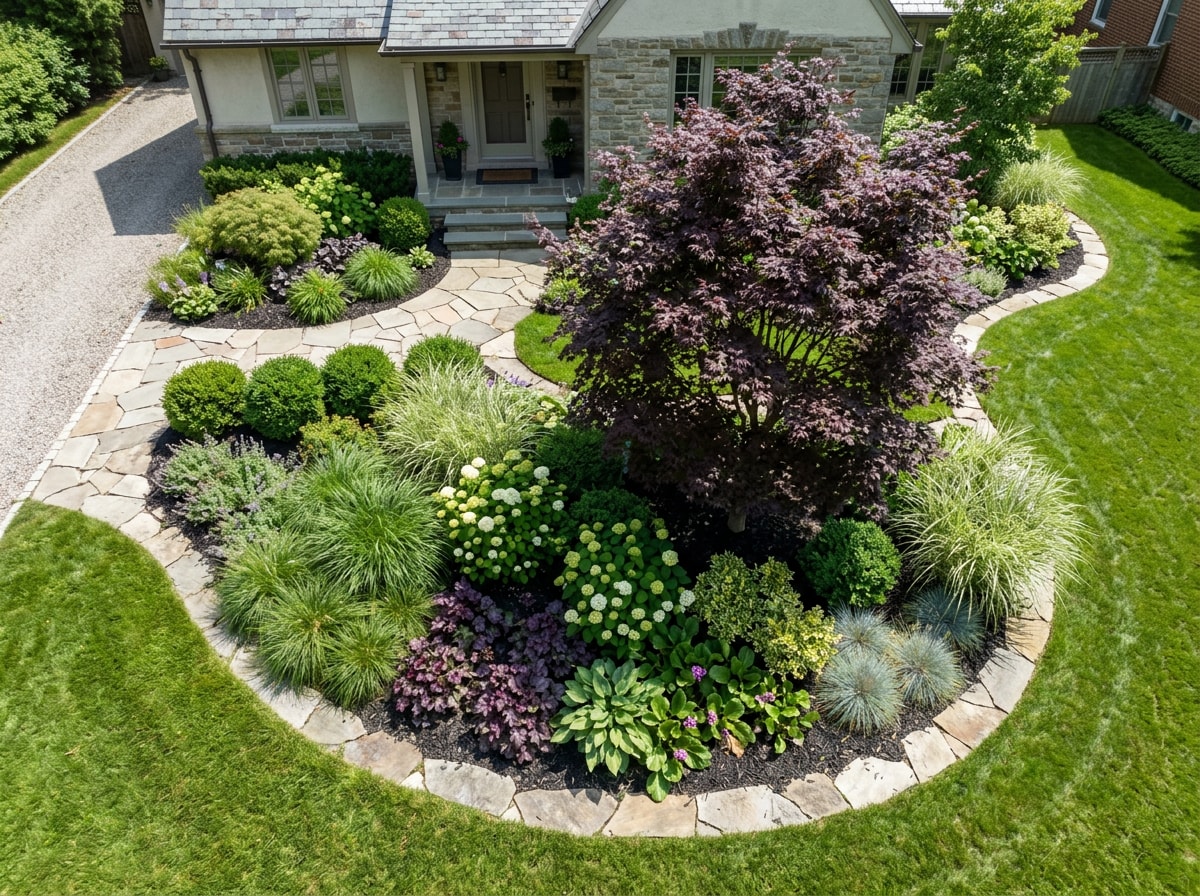
Planning Your Front Garden Project: Budget, Mulch, and Sequence
Project planning usually starts with measuring bed square footage. Divide that number by 108 for a three-inch mulch layer, or by 162 for a two-inch layer, to estimate yardage. It's worth rounding up, since edging and natural settling eat into material faster than the math suggests.
| Bed Size (sq ft) | Mulch Needed (2" layer) | Mulch Needed (3" layer) |
|---|---|---|
| 100 | 0.6 cubic yards | 0.9 cubic yards |
| 200 | 1.2 cubic yards | 1.9 cubic yards |
| 300 | 1.9 cubic yards | 2.8 cubic yards |
| 400 | 2.5 cubic yards | 3.7 cubic yards |
A simple sequence keeps the project from becoming a scattered mess:
- Measure beds and walkways to scope the job.
- Amend soil across the full bed, not just planting holes.
- Install mulch, edging, or hardscape elements.
- Plant, working from structural pieces down to smaller perennials and annuals.
Skipping the amendment step to save time is the most common mistake we see, and it's usually the first thing that shows up as stunted growth the following summer.
A phased budget stretches further when it follows that same order: structural bones first, perennials and detail work later, spread across a season or two instead of done all at once. A few smaller moves also help:
- Refresh existing mulch before buying new plants; it's one of the cheapest curb-appeal upgrades available.
- Use container plantings near the entry to add color without committing to a full bed.
- Install clean edging around existing beds before considering pricier hardscape additions.
Big-ticket items like retaining walls or stone pathways can wait until the structural plan is set. Browse real completed yards on our projects page for a sense of what different budgets actually produce, or request a free estimate before ordering materials.
Create a Welcoming Entryway
The entry path and the beds flanking it are where most visitors form their first impression, so this is usually where design effort pays off fastest. Two choices shape that impression more than any other: which flowers bloom, and how their colors are arranged.
Choose Season-Long Blooming Varieties
Marigolds provide steady color from spring until the first frost in shades of yellow, orange, and deep red, and need very little upkeep once established. Petunias bloom continuously for months with regular deadheading and consistent watering.
Shadier spots near covered porches call for different options. Impatiens thrive in partial shade, and New Guinea impatiens specifically offer larger blooms with better sun tolerance than standard varieties. Begonias pair well alongside them, adding waxy-leafed texture under similar light and moisture conditions.
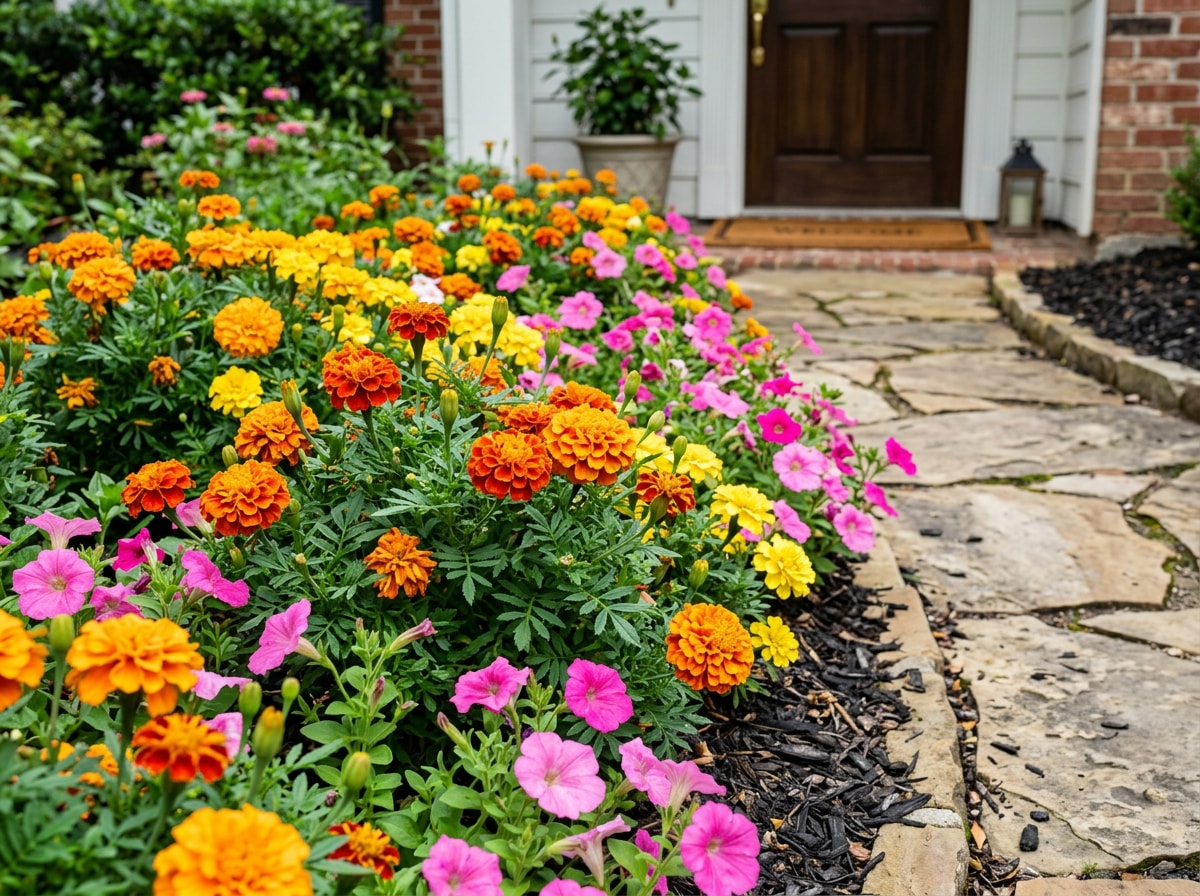
Plant in Complementary Color Schemes
A monochromatic planting uses different shades within one color family for a calm, cohesive look, such as white alyssum paired with white petunias and white impatiens. Analogous schemes sit one step bolder, combining colors near each other on the wheel, like purple petunias with lavender ageratum and deep purple coleus.
For more drama at the front door, complementary pairings (opposite hues like purple and yellow, or orange and blue) create sharper visual contrast. Whichever direction fits the home's exterior palette, picking one approach and sticking to it keeps the entryway from feeling random.
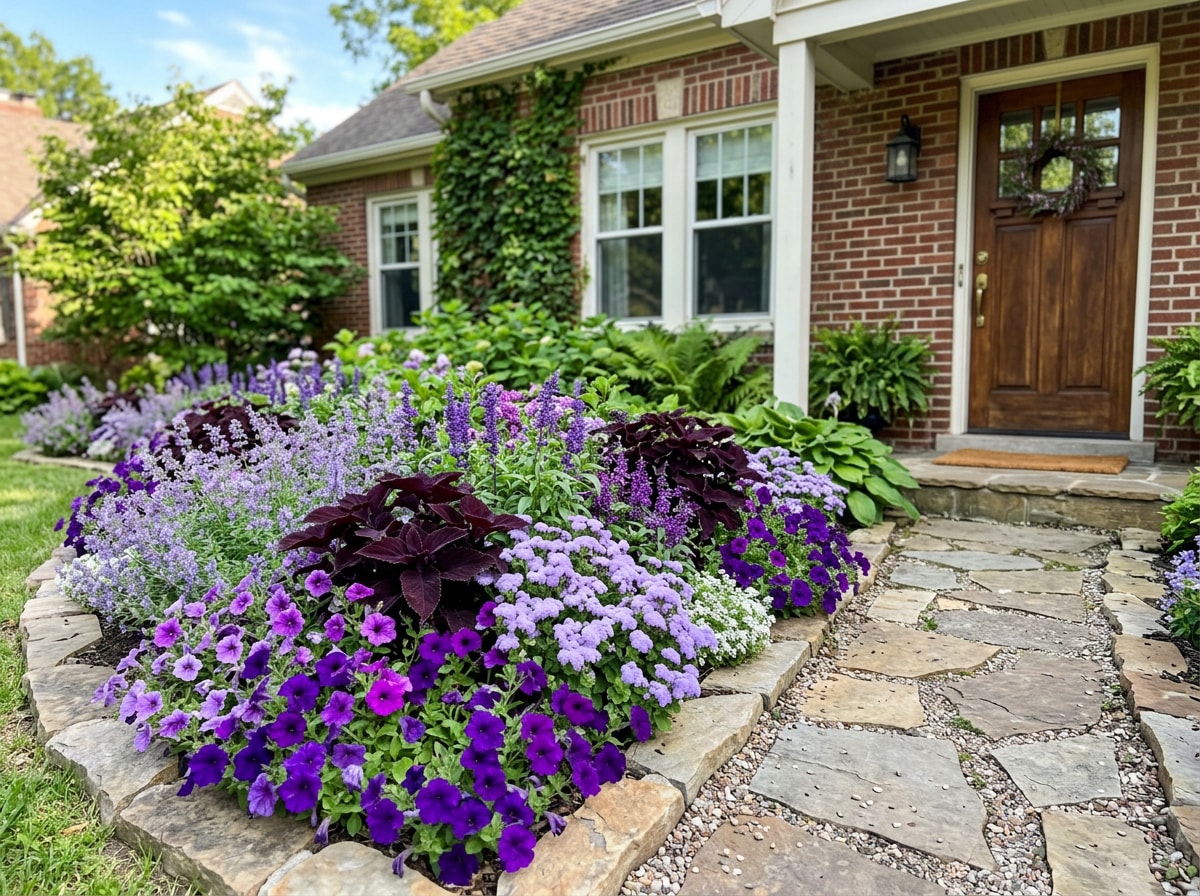
Front Yard Landscaping Ideas by Home Style
Matching a planting style to the home's architecture tends to produce a more cohesive result than copying whatever looks good online. Green Hills has a strong mix of brick colonials, Craftsman bungalows, and the occasional Tudor, each pairing naturally with a different approach. The same logic holds for the brick and stone homes common in nearby Forrest Hills.
| Style | Best Suited To | Key Plant Choices | Feel |
|---|---|---|---|
| Modern | Brick colonials with pared-back trim | Boxwood cubes, ornamental grasses, single sculptural tree | Clean, restrained, geometric |
| Traditional | Brick colonials, center-hall homes | Boxwood, hydrangea, symmetrical foundation beds | Formal, balanced, classic |
| Softened Craftsman | Bungalows | Looser mixed shrubs with balanced structure | Relaxed but still ordered |
Modern Front Yard Landscaping
Modern front yard landscaping leans on clean lines, geometric shapes, and a restrained plant palette, favoring architectural specimens over a dense mixed bed. It suits homes with simple rooflines and minimal exterior trim; heavily ornamented Tudor exteriors can feel mismatched against such a stark style.
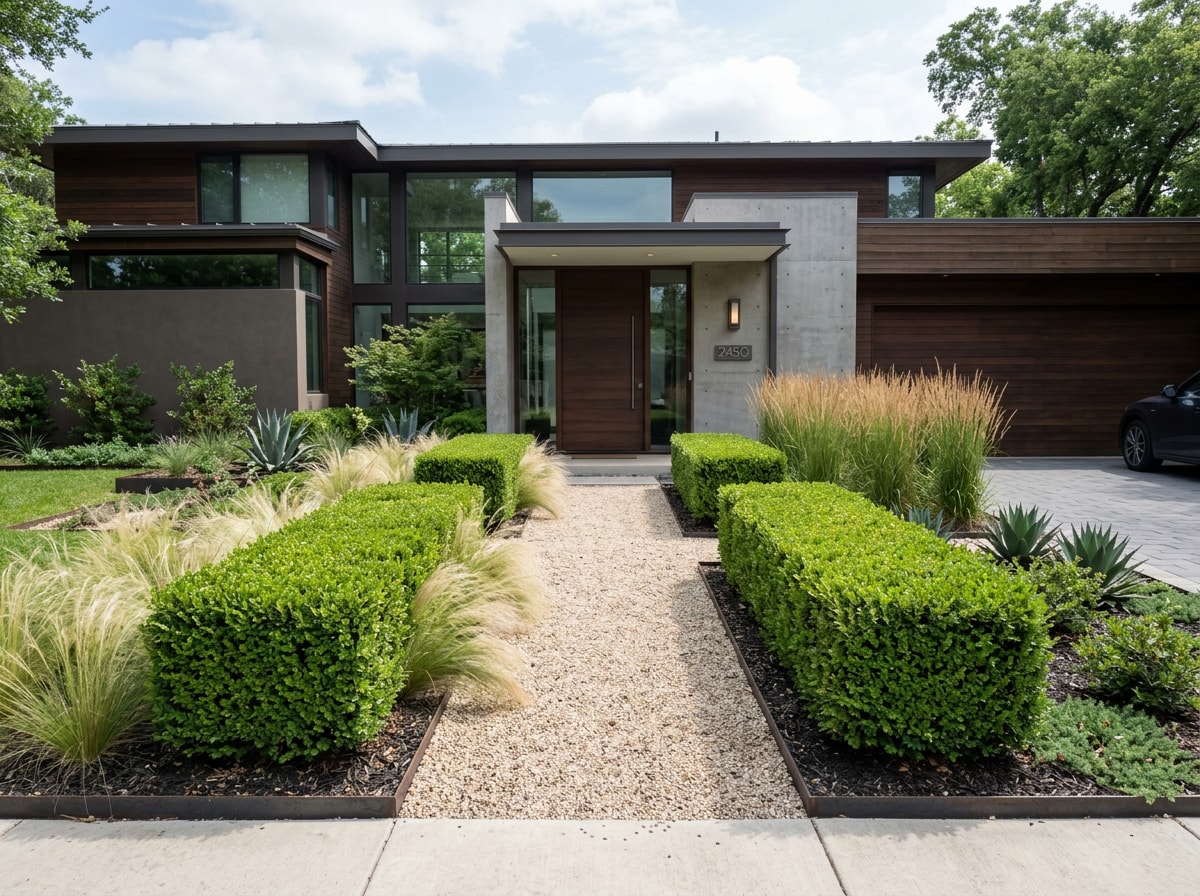
Traditional Front Yard Landscaping
Traditional landscaping favors symmetry, classic plant pairings like boxwood and hydrangea, and a formal structure that mirrors the front door on either side. This is a near-default match for Green Hills' brick colonials and center-hall homes, where a symmetrical layout reinforces the architecture instead of competing with it.
Plant a Dedicated Front Yard Garden Bed
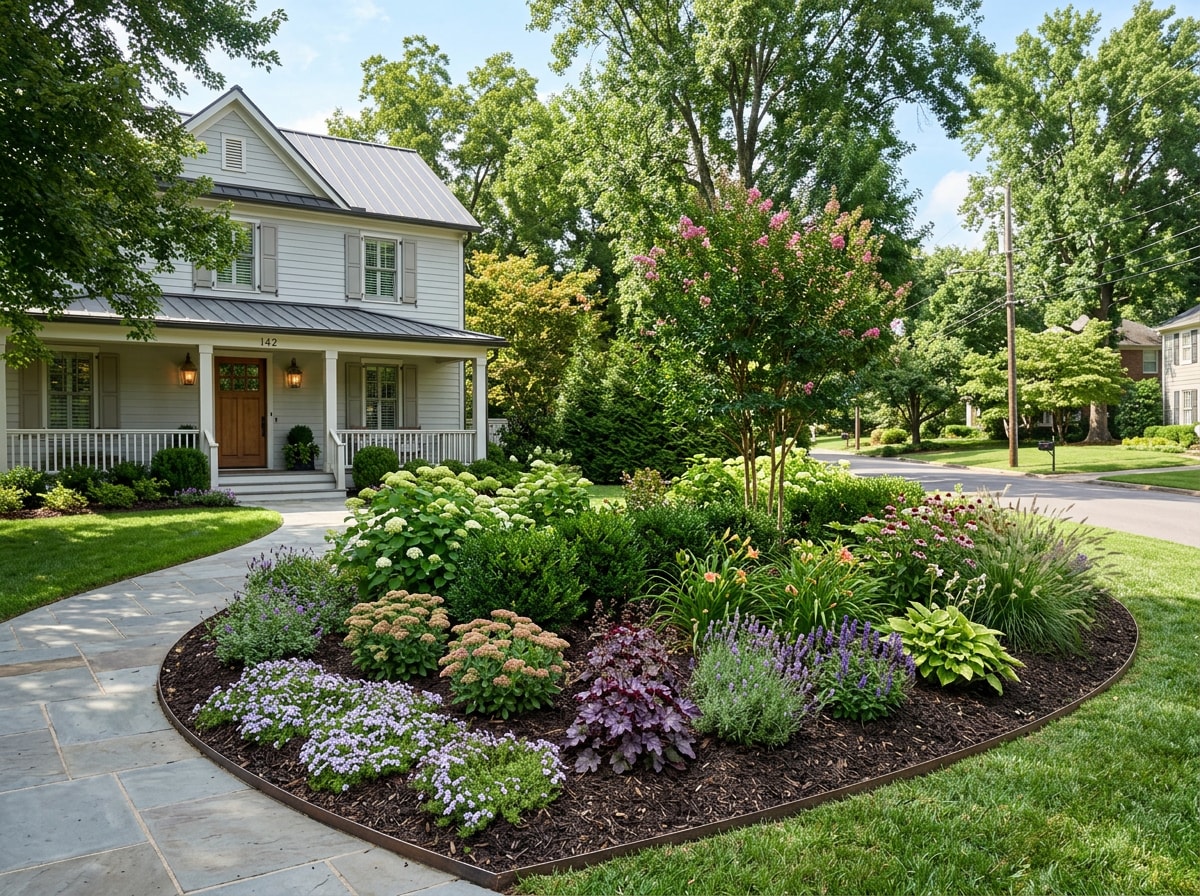
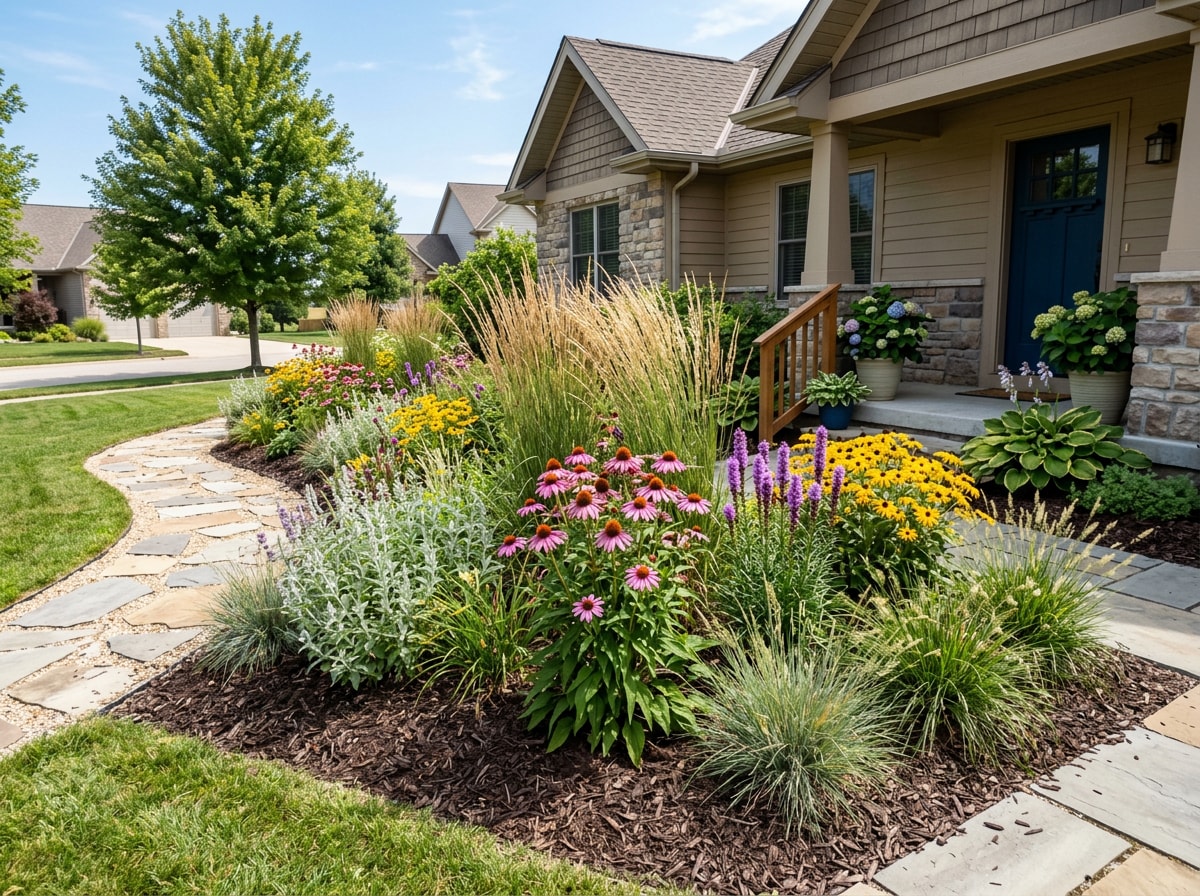
A dedicated front yard garden is different from standard foundation planting along the house. Instead of a single row of shrubs hugging the exterior wall, it's a freestanding bed, often mixed perennials, a few flowering shrubs, or even a small cutting garden, positioned where it becomes a genuine landscape feature rather than background greenery.
Siting is everything. A front garden bed needs real sun exposure (most mixed perennial beds want at least six hours of direct light), clear visibility from the street, and enough distance from walkways that plants won't flop over the path by midsummer.
This approach takes more planning than foundation shrubs alone, but it's usually the single feature that makes a front yard memorable instead of simply tidy. If you're also rethinking the back of the house, our guide to backyard landscaping in Nolensville, TN covers the same layered-bed approach applied to a different space.
Drought-Tolerant Landscaping for Middle Tennessee Summers
Middle Tennessee summers run hot and humid, and a front yard full of thirsty annuals can mean daily watering by July. Drought-tolerant landscaping, including ornamental grasses, coneflower, yarrow, and many native perennials, cuts that maintenance load considerably once plants are established.
This ties directly back to the soil work covered earlier. A bed that's been properly amended with compost holds moisture more evenly, so pairing well-prepped silt loam with water-wise plant choices reduces irrigation needs even through a dry summer. Choosing the right plants, supporting soil health, and proper maintenance are all keys to water-smart landscapes , according to the EPA's WaterSense landscaping guidance, which is a solid, non-commercial reference for building a lower-water plant palette.
Extend Curb Appeal After Dark With Landscape Lighting
A front garden that looks great at 2 p.m. often disappears entirely after sunset, which is a missed opportunity in a neighborhood where evening walkers notice everything. Uplighting a specimen tree, grazing a textured foundation bed, or lining a front walk with low path fixtures extends the design investment into the hours most neighbors and visitors actually see it.
Our landscape lighting design and installation) team typically starts with a landscape lighting design or outdoor lighting design plan built around the same focal points used in the daytime layout, then moves into landscape lighting installation or outdoor lighting installation. For homeowners who want to see the plan before committing, a landscape lighting rendering shows roughly how the fixtures will look against the finished beds.
Protect the Investment: Lighting Maintenance and Inspections
Fixtures and transformers take a beating from Tennessee's humidity and freeze-thaw winters, so a yearly check keeps a lighting system from quietly failing bulb by bulb. Our lighting maintenance and repair services cover routine landscape lighting maintenance and outdoor lighting maintenance, along with landscape lighting repair and outdoor lighting repair when a fixture or connection fails outright.
If you're not sure what shape an existing system is in, a lighting system inspection is the fastest way to find out before small problems turn into a full rewire.
Permits, HOA Rules, and Working With a Local Pro
Basic planting, mulching, and small bed installations generally don't require a permit in Green Hills. Grading changes, retaining walls, and drainage alterations are a different story. Projects that have temporary or permanent soil stabilization measures applied to denuded areas within 15 days of disturbance, and that don't involve a quantity of material in excess of 100 cubic yards, generally fall outside standard grading permit requirements , but anything beyond that scope typically needs review. Metro's own grading permit guidance page lays out exactly which projects trigger a review.
Parts of Green Hills also fall under HOA or neighborhood design guidelines that apply separately from city permitting, so it's worth checking those before major changes. If the scope of your project is unclear, a quick conversation before you break ground is cheaper than a redesign after. Contact our team for a walkthrough and a free estimate.
FAQ
How much does front yard landscaping cost in the Nashville/Green Hills area?
Costs vary widely depending on scope. A basic bed refresh with mulch and a handful of plants often runs a few hundred dollars, while a full front yard redesign with hardscape and lighting can reach five figures. Labor typically makes up the majority of total project cost in this market, more than materials. Getting an accurate estimate usually requires an in-person walkthrough, since soil condition, existing drainage, and grading needs all shift the final number.
What's the difference between hardscaping and softscaping a front yard?
Hardscaping refers to the non-living structural elements of a yard, such as walkways, retaining walls, patios, and edging. Softscaping covers the living components like plants, lawn, and mulch. Most front yards need a balance of both, since hardscape provides structure and access while softscape supplies color, texture, and seasonal interest.
Do you need a permit for landscaping a front yard in Green Hills?
Usually not for basic planting, mulching, or small bed work. Grading changes, retaining walls, and drainage alterations typically do need review from Metro Codes or Metro Water Services. Check HOA or neighborhood design guidelines separately, since those rules apply on top of city permitting.
What are the best low-maintenance plants for a front yard?
Drought-tolerant perennials, evergreen shrubs, and native species covered in the drought-tolerant section above are the easiest-care options. Leaning on those categories, rather than high-maintenance annuals alone, keeps watering and upkeep manageable through a full Green Hills growing season.
Does landscape lighting add value to a front yard in Green Hills?
It extends the usable hours of the design and makes the entry safer and more visible at night, which matters in a walkable neighborhood. Pairing a planted front garden with even basic path and uplighting is one of the more noticeable upgrades for evening curb appeal.
What's the best time of year to start a front yard landscaping project in Middle Tennessee?
Fall and early spring are generally best for planting trees, shrubs, and perennials, since cooler temperatures reduce transplant stress. Soil amendment and hardscape work can happen almost any time the ground isn't frozen or saturated.