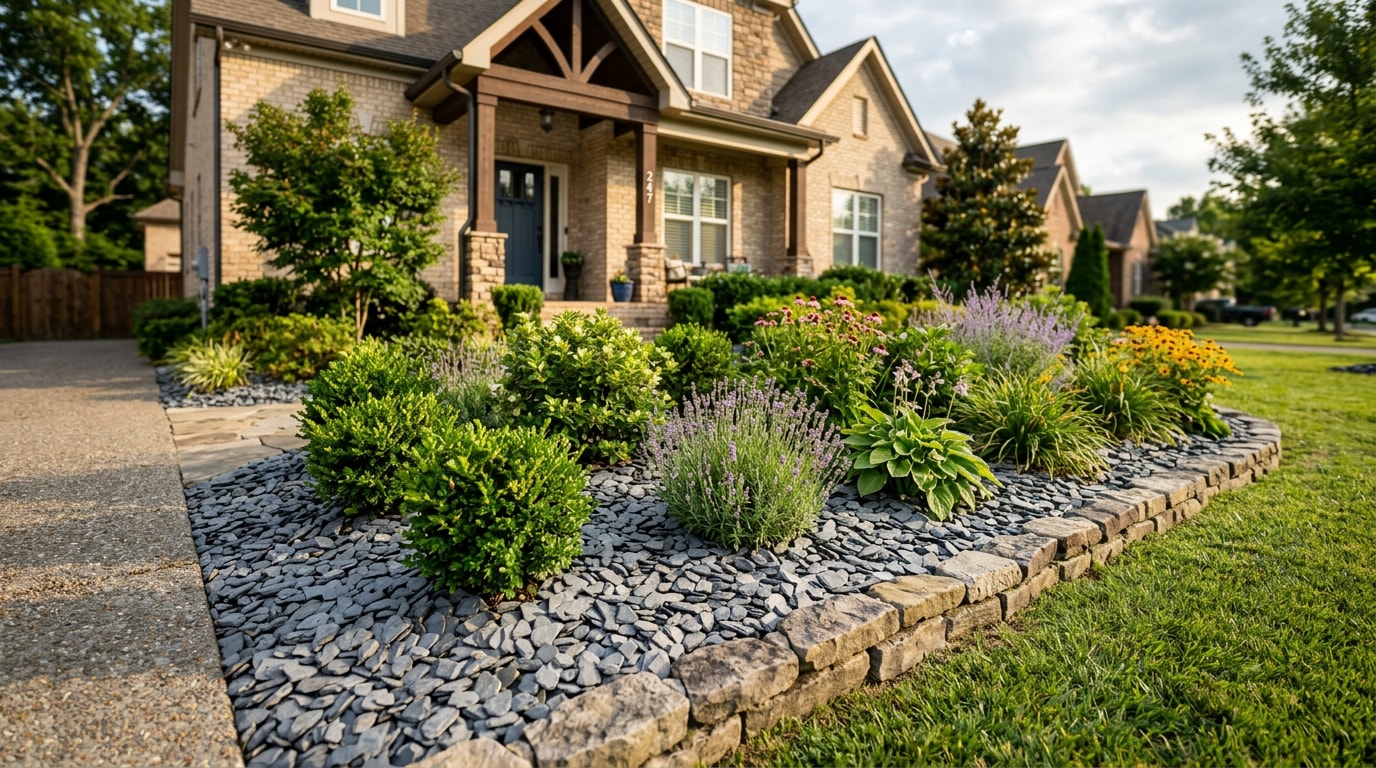

Landscaping around mobile home skirting in Forrest Hills, TN protects the panels from weed-trimmer damage and gives the home a finished, grounded look. Done right, it also manages the clay-soil drainage problems that trip up a lot of DIY plans. This guide walks through plant picks, hardscape ideas, and the clearance rules that keep the project from working against the skirting's real job.
Understanding Mobile Home Skirting and Its Purpose
Skirting is the panel system that wraps a manufactured home's perimeter, closing the gap between the floor and the ground. It shields plumbing, ductwork, and electrical connections from weather and pests while giving the home a built-in look instead of one propped on blocks.
Well-maintained skirting also blocks cold air from circulating underneath the home, which helps pipes resist freezing. Landscaping that respects this job, rather than trapping moisture against the panels or blocking vents, works with the system instead of against it.
Federal installation standards back this up directly. A crawlspace with skirting must have ventilation openings totaling not less than one square foot for every 150 square feet of the home's floor area , and an access opening at least 18 inches wide and 24 inches tall, totaling at least three square feet, must be provided and located so utility connections stay reachable . Any planting bed, retaining wall, or lattice panel that covers one of these openings works against the system the skirting was built to support.
Choosing the Right Plants, Shrubs, and Trees for Clay Soil
Start plant selection with purpose, whether that's privacy, shade, color, or pollinator habitat, then check mature size before anything goes in the ground. A shrub that looks small in a nursery pot can grow wide enough to press against skirting panels within a few seasons, trapping moisture and blocking vents.
Compact shrubs like boxwood, dwarf hydrangea, and shrub roses hold a tidy shape with light pruning. Flowering annuals such as petunias, marigolds, and daisies add seasonal color without demanding much root space.
Middle Tennessee's dense clay drains slowly after heavy rain, which narrows the list of plants that thrive right along a skirting line. Dwarf yaupon holly, black-eyed Susan, creeping phlox, switchgrass, and daylilies all tolerate clay with little fuss, and amending the planting hole with compost helps roots establish faster. Forrest Hills generally falls in USDA Hardiness Zone 7a to 7b depending on which edition of the map you check, so it's worth confirming your exact zone before ordering plants in bulk.
If your yard has areas where grass simply won't hold up against the clay and shade near the home's base, it's worth reading our separate guide on artificial turf landscaping in Forrest Hills, TN, which covers a lower-maintenance alternative for tricky terrain.
Landscaping Ideas for Around Mobile Home Skirting
Most properties end up combining two or three of the ideas below. A mulch bed paired with low lighting and a short retaining wall is a common combination in Forrest Hills.
Foundation Planting Beds & Flower Borders
Tiered foundation beds place the tallest plants closest to the skirting, medium shrubs in the middle, and low-growing flowers or groundcover along the outer edge. This stair-step effect hides the skirting line gradually instead of creating a hard visual break between home and lawn.
Layered flower borders can rotate with the seasons. Swap petunias and marigolds through summer for mums and ornamental kale once fall arrives, keeping color at the base of the home nearly year-round.
Rock Gardens, Decorative Stone Borders & Ground Cover
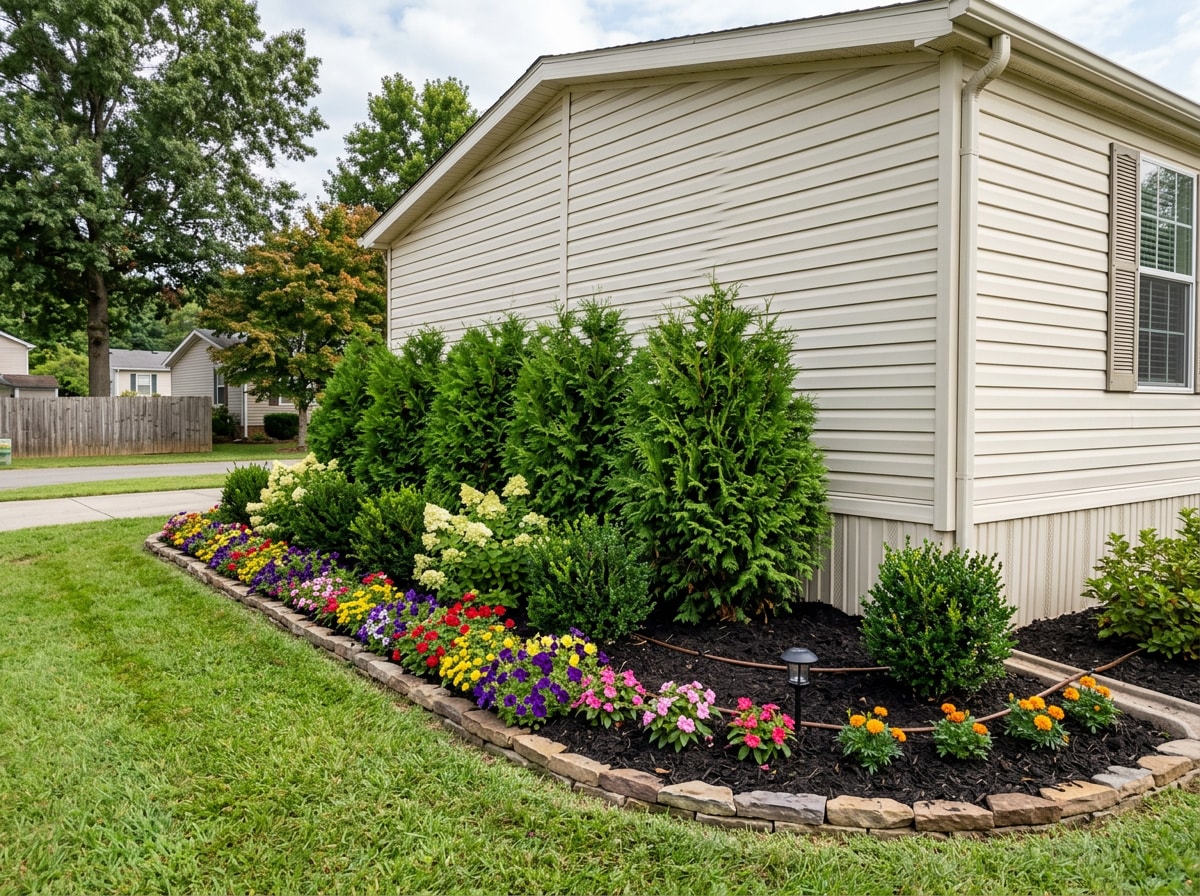
A rock or pebble border outlines the skirting with almost no upkeep, and loose stone improves drainage where water tends to pool against the panels. River rock, lava rock, and crushed granite all work, and matching a color to the skirting makes the border look intentional rather than incidental.
Ground-cover plants fill gaps between stones without overwhelming them:
- Creeping thyme spreads low and tight, crowding out weeds.
- Sedum tolerates dry spells once established.
- Ajuga holds soil on sloped ground near the skirting.
Decorative Edging & Mulch Beds
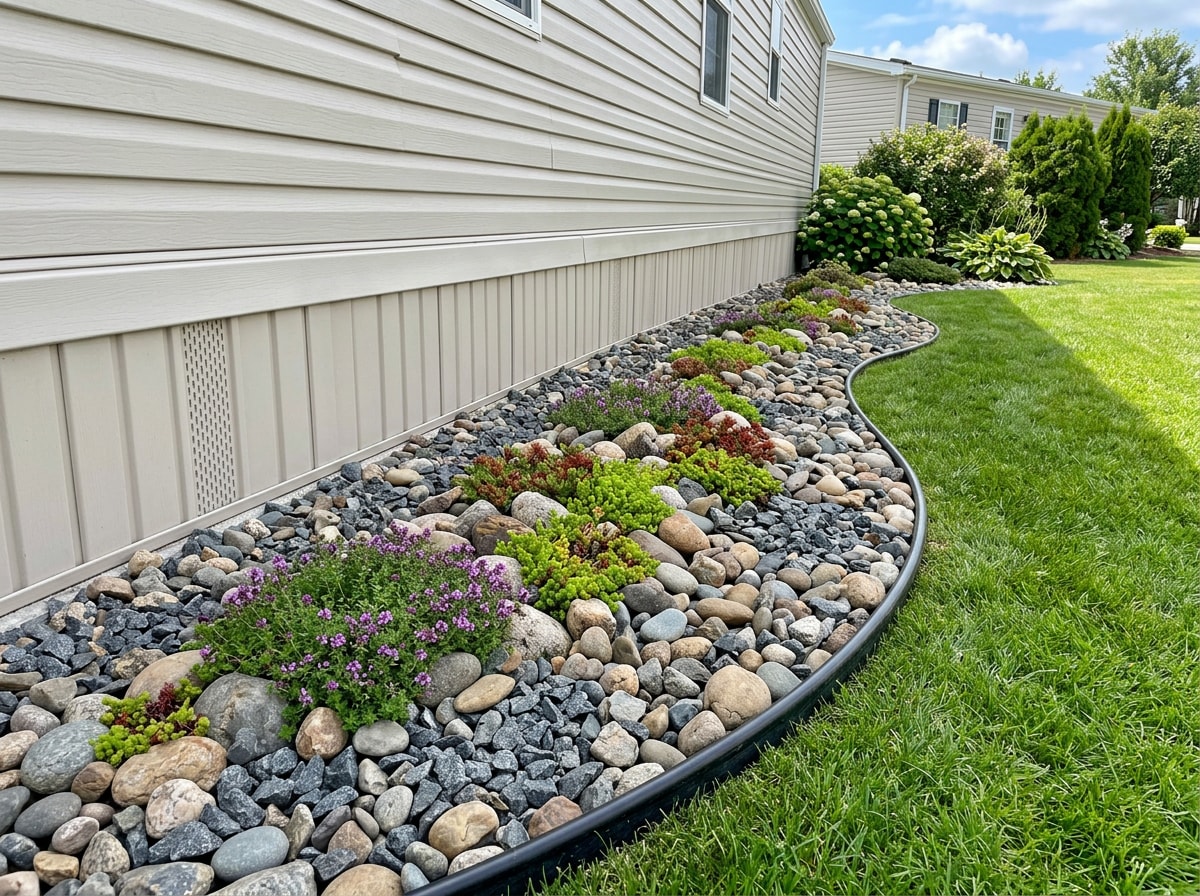
Edging contains mulch, stops grass from creeping into beds, and draws a clean line between lawn and planting area. Metal, plastic, stone, or brick edging all work; the choice usually comes down to budget and how formal the look should be.
Mulch clearance matters more than mulch color. A university extension entomology program puts it plainly: mulch should never be spread so that it touches the foundation or lowest level of siding on a home , and siding should always sit at least 6 inches, preferably more, above the soil line to avoid decay and hidden pest activity . That buffer keeps moisture and wood-boring insects away from the panels while the bed still looks full.
Lattice & Trellis Screening
Lattice panels add vertical texture and partially screen the skirting without boxing it in, as long as airflow underneath is preserved. Climbing vines like clematis or morning glory can turn a plain lattice section into a living wall within a season or two.
Install lattice on its own frame with brackets anchored into the ground or a short post, not directly against the skirting. Leave a few inches of airflow space between the lattice and the panels so moisture can't get trapped and access panels stay reachable for repairs.
Hardscaping: Retaining Walls, Walkways & Seating Areas
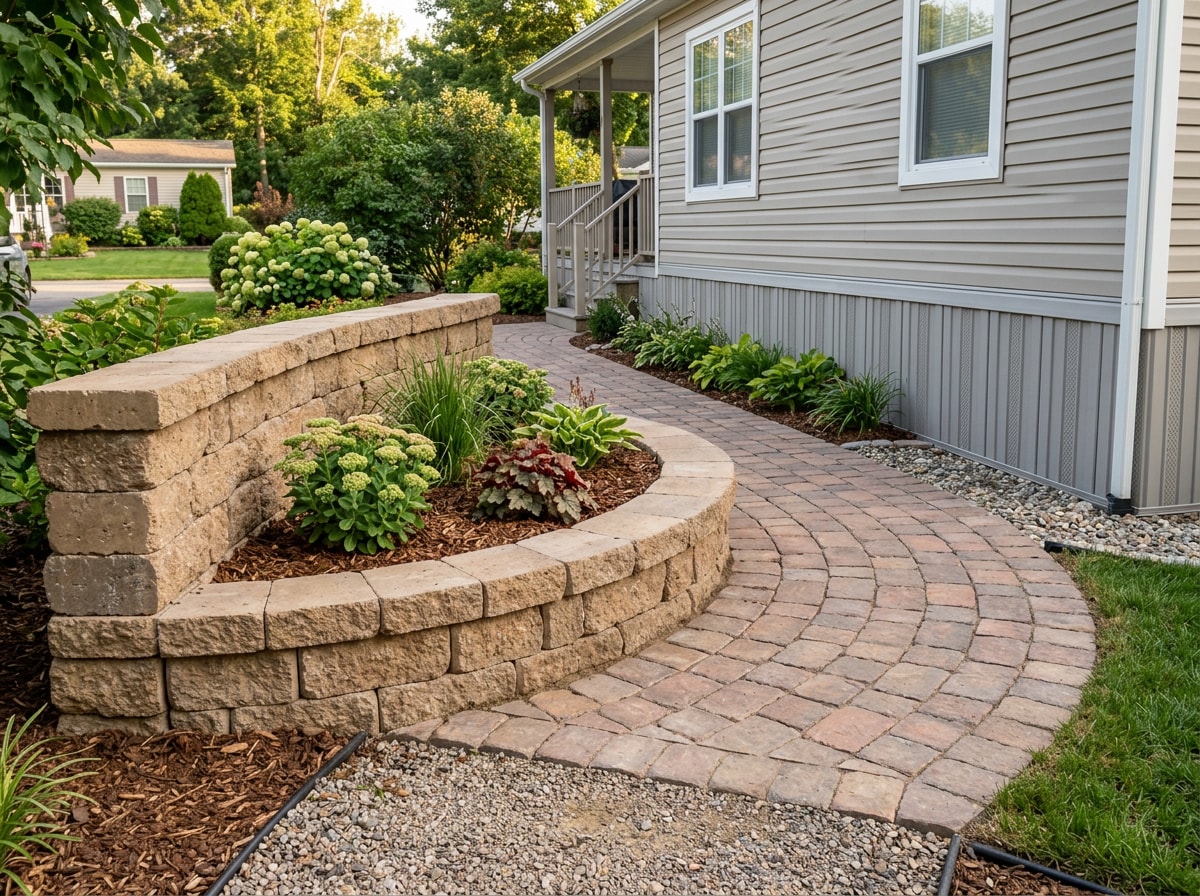
Retaining walls, walkways, and small seating areas turn the ground around skirting into usable space instead of just a planting strip. A short retaining wall with a built-in planting pocket can manage a sloped yard while doubling as a raised bed along the skirting line.
Material choice changes both cost and lifespan:
| Material | Relative Cost | Durability |
|---|---|---|
| Retaining-wall block | Moderate | High, decades with proper base prep |
| Landscape timber | Low | Moderate, 7-15 years before rot sets in |
| Poured concrete curb | Higher | Very high, but harder to modify later |
Block systems hit a middle ground for most Forrest Hills properties: easier to install than poured concrete, longer-lived than timber.
Landscape Lighting Around Skirting
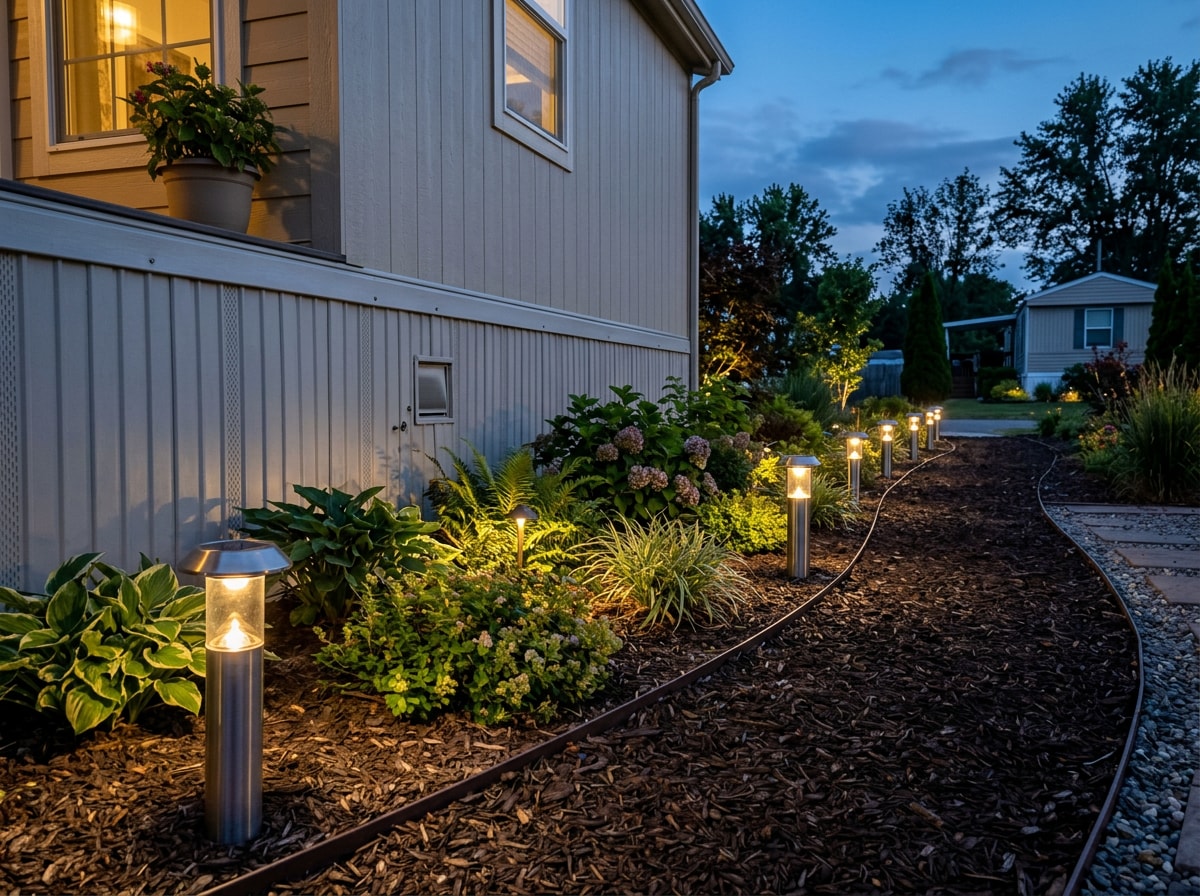
Lighting along steps and walkways adds real safety after dark, and low, perimeter-level fixtures that wash light along the skirting line highlight planting beds while making the base of the home visible at night.
Our crews at Homelight Nashville run low-voltage wiring along skirting lines regularly, and the clay soil in and around Forrest Hills tends to hold standing water right at that edge for a day or more after a heavy storm. That's worth planning around before any fixtures go in the ground, not after.
Solar pathway lights are the simplest upgrade, spaced roughly every 4 to 6 feet along a walkway or bed edge. For a more finished, wired system that follows the exact contour of your beds, our landscape lighting design and landscape lighting installation services handle layout and wiring together, so fixtures end up placed before mulch and plants, not wedged in afterward.
Designing a Full Landscape Plan Around Your Skirting
Before buying plants, sketch how the space around the skirting will function. Give each side of the home one focal point, such as a flowering shrub or small bench, rather than scattering attention everywhere, and choose materials that echo the home's exterior.
Once the layout is set, follow a simple build order:
- Test and amend the soil.
- Install hardscape elements like pathways first.
- Plant beds back to front.
- Add lighting last, once bed lines are final.
Working in this order avoids digging up new plants to fix drainage or run wiring later. If you want to see how a lighting layout will actually look before committing to it, a landscape lighting rendering maps fixture placement against your real beds and skirting line ahead of installation. You can also browse finished examples on our projects page for layout ideas before you sketch your own.
Clearance Rules Worth Following
Good design around skirting follows a few non-negotiable rules, and clearance comes first. The ventilation and access-opening standards covered earlier aren't just federal boilerplate; they're the baseline any landscaping plan has to work around.
Tree placement deserves the same discipline. A university extension program recommends that shade trees be planted at least 25 feet away from houses, buildings, or other obstacles , and fast-growing species like willows and silver maples warrant even more room given how aggressively their roots spread. That distance applies to skirting and its underground connections just as much as it does to a poured foundation.
Beyond clearance, cohesion matters. Matching mulch, stone, or edging color to the skirting's tone, rather than fighting against it, makes the whole base of the home look designed rather than patched together. Homeowners in our Forrest Hills, TN service area can request a free walkthrough through our contact page to check vent placement before any digging starts.
Common Mistakes to Avoid
Even a well-planned landscape runs into trouble if a couple of common missteps go unchecked.
Planting trees too close to the skirting. Trees planted within 10 feet can send roots toward utility hookups and anchoring systems, eventually cracking or lifting the panels. Willows and silver maples are the worst offenders for this.
Ignoring the skirting area entirely. The strip where skirting meets the ground sits at eye level for anyone walking up the driveway. Leaving it bare, weedy, or littered with debris undercuts even a well-kept lawn elsewhere, since it draws the eye straight to the least finished part of the property.
Maintaining Your Landscape Around Skirting
Plants and hardscaping around skirting need periodic attention to stay looking intentional instead of overgrown. A simple seasonal rhythm keeps maintenance from piling up:
- Spring: Refresh mulch and check that winter settling hasn't buried any vents.
- Summer: Trim shrubs and vines back from vents before growth blocks airflow.
- Fall: Clear fallen leaves and spent annuals to prevent mold and pest habitat against the skirting.
- Winter: Confirm vent clearance before snow or mulch buildup narrows the required gap.
If you've already got landscape lighting installed along the skirting line, roll a quick fixture check into that same seasonal walk. Our lighting maintenance and repair) team handles everything from landscape lighting maintenance to a full lighting system inspection, so fixtures and wiring get checked at the same time as mulch and vent clearance.
Final Thoughts
A successful landscape around mobile home skirting comes down to three decisions: how the space gets used, where plants and trees go relative to the skirting, and which design elements tie it together. Get that plan right, and plant choice, maintenance, and seasonal upkeep tend to fall into place with far less trial and error.
Ready to put a plan in place, lighting included? Get a free estimate and the team at Homelight Nashville will walk the property with you before anything goes in the ground.
FAQ
Can I plant directly against mobile home skirting?
Leave a small gap rather than planting right against the panels, and use removable planters near access points so technicians can still reach vents and utilities. In Forrest Hills' clay soil, that gap also matters for drainage, since water that can't escape tends to pool against the skirting after heavy rain.
Does mobile home skirting need to be vented?
Yes. Federal installation standards require crawlspace ventilation openings sized to the home's floor area, plus an accessible opening for utility connections, as covered in the clearance section above. Skipping or blocking vents with landscaping undermines the exact problem skirting is meant to solve.
How far should mulch or plants be from mobile home skirting?
Keep mulch at least 6 inches from skirting panels and siding, and give larger shrubs or trees enough room to reach full mature width without pressing against the panels. A couple of feet of buffer for bigger plants avoids trapped moisture and blocked vents down the road.
Should I landscape around the skirting of a mobile home?
Yes. A thoughtfully planted and maintained skirting line boosts curb appeal, protects panels from weed-trimmer damage, and helps manage drainage around the home's base. It's a relatively small project with an outsized impact on how finished the whole property looks.
Does landscaping around skirting affect home value in Forrest Hills, TN?
It can. A finished, well-maintained skirting line reads as pride of ownership to buyers and appraisers alike, while bare or overgrown skirting draws attention to the least polished part of the property. The improvement cost is usually modest compared to the curb-appeal gain.