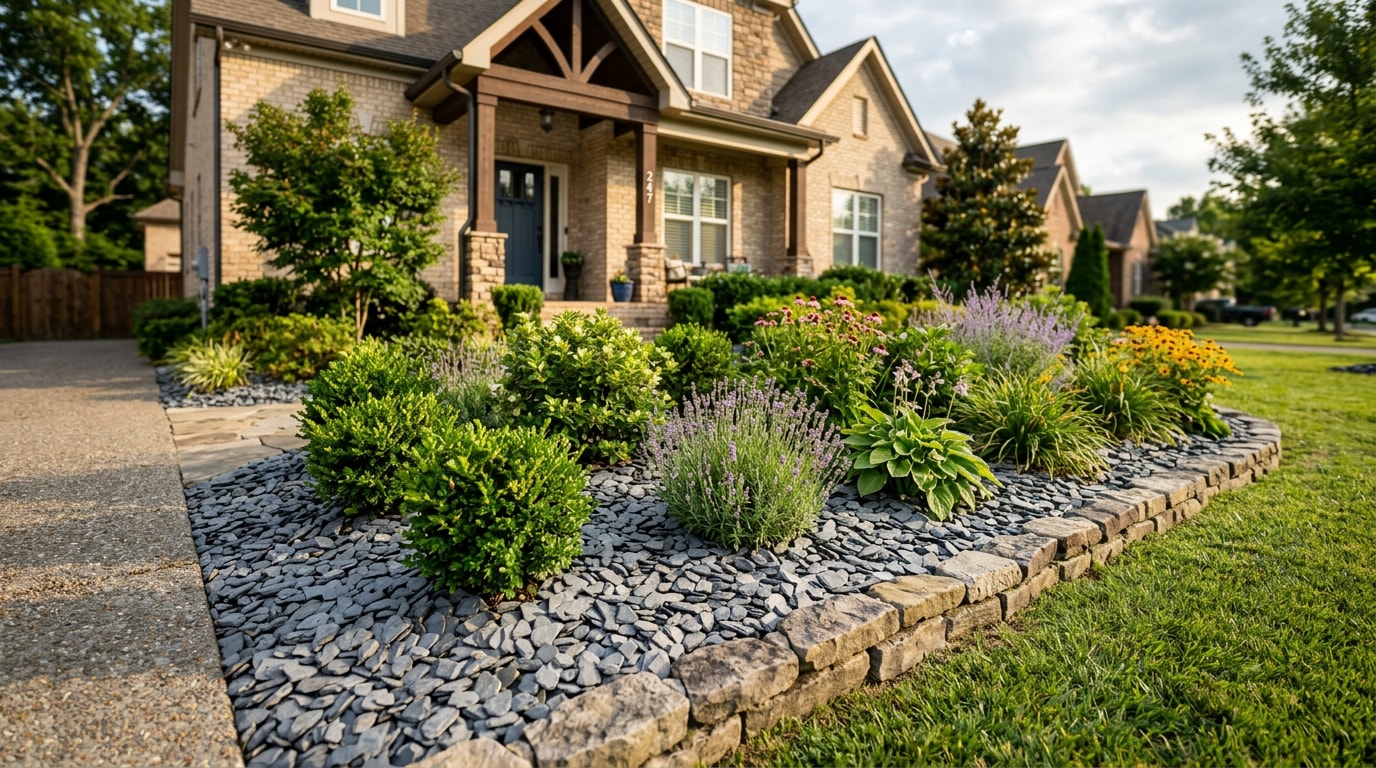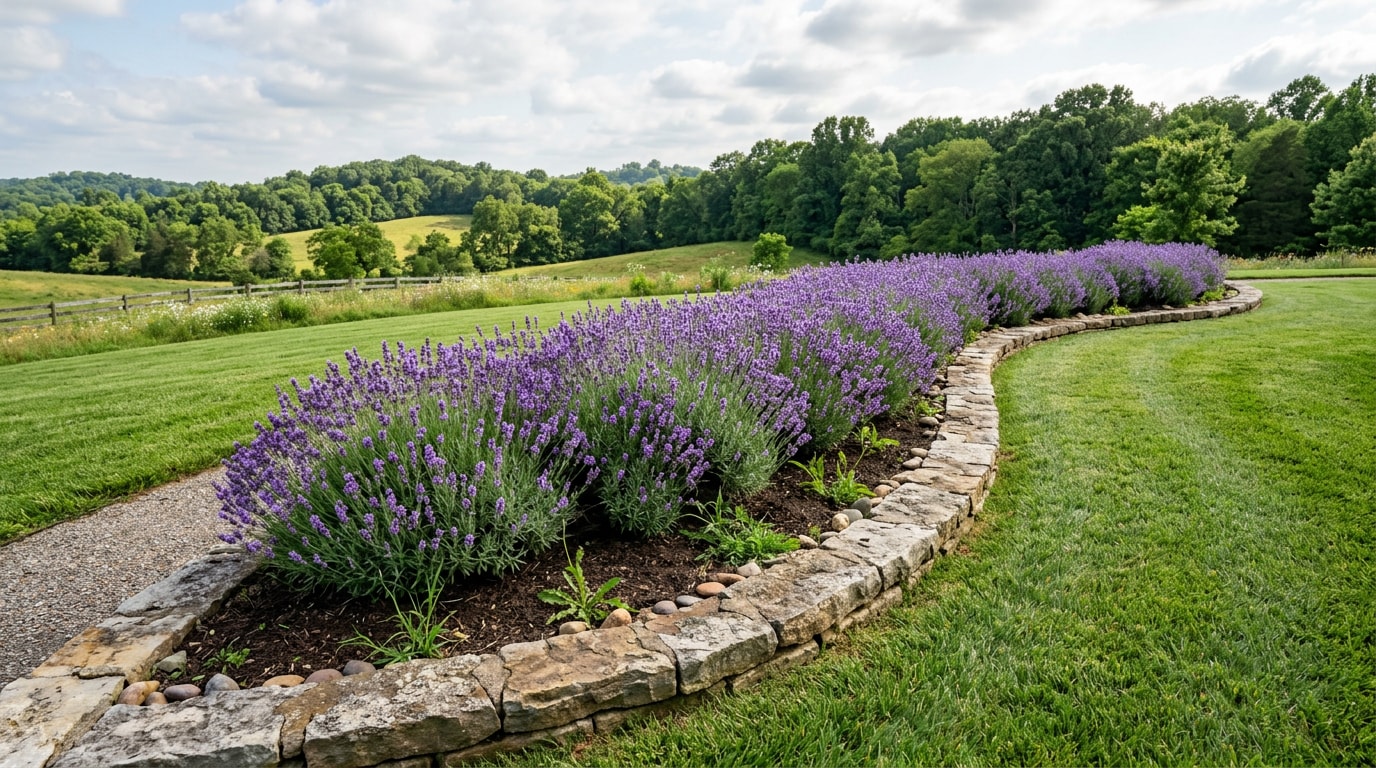
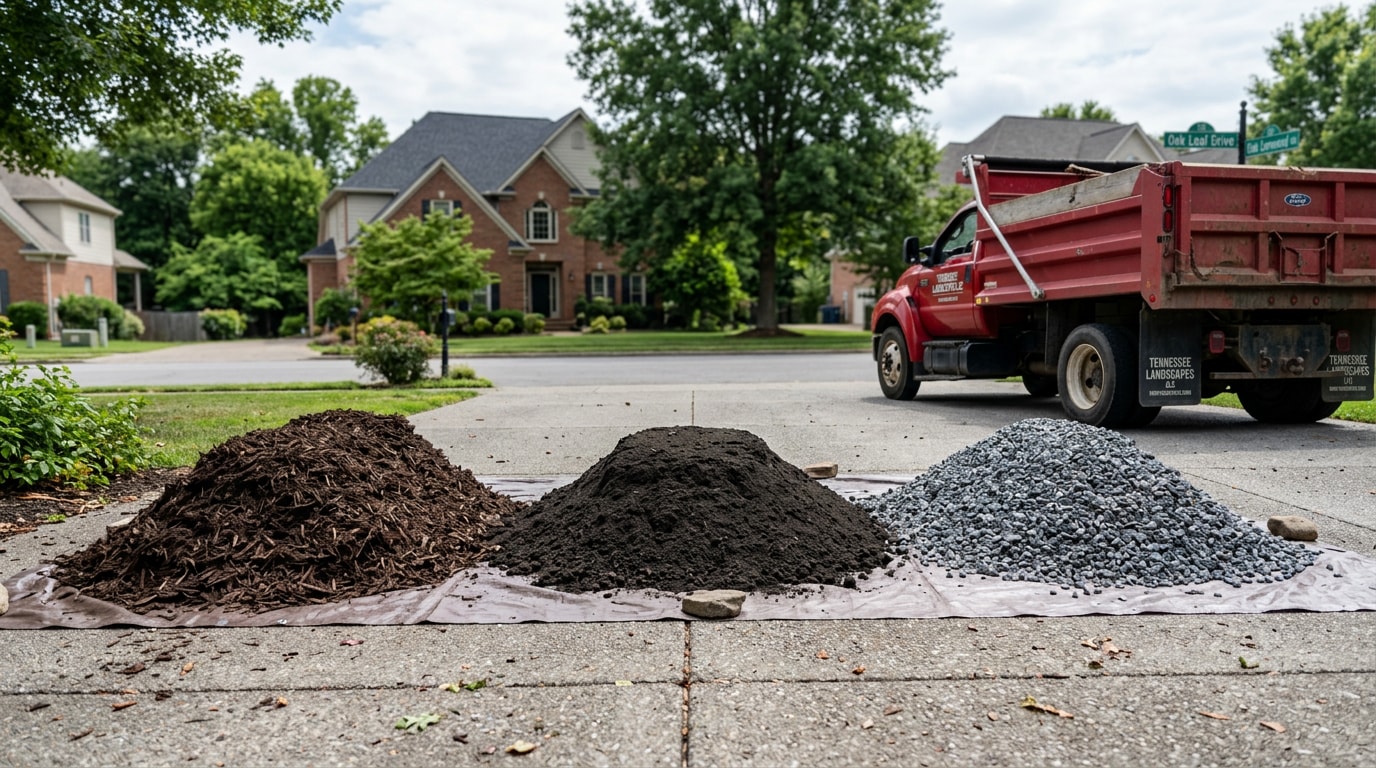
Landscape supplies in Nolensville, TN run the gamut from bulk mulch and screened topsoil to #57 crushed stone and mason sand, and the right choice depends on your soil, your drainage, and what you're actually building. Our crews install outdoor lighting on properties across Nolensville, so we spend a lot of time standing in client beds, trenches, and gravel paths watching which materials hold up and which ones fail within a season. This guide covers what's available, how much to order, and what Nolensville's clay-and-limestone ground does to your plans.
Materials Available for Delivery in Nolensville
Local yards and bulk suppliers stock the same core lineup most Middle Tennessee properties need:
- Mulch (shredded hardwood, pine bark, dyed and natural)
- Topsoil and fill dirt
- Gravel and crushed stone in several sizes
- Mason sand and fill sand
- Compost and garden soil blends
- Retaining wall block, pavers, and boulders
Mulch
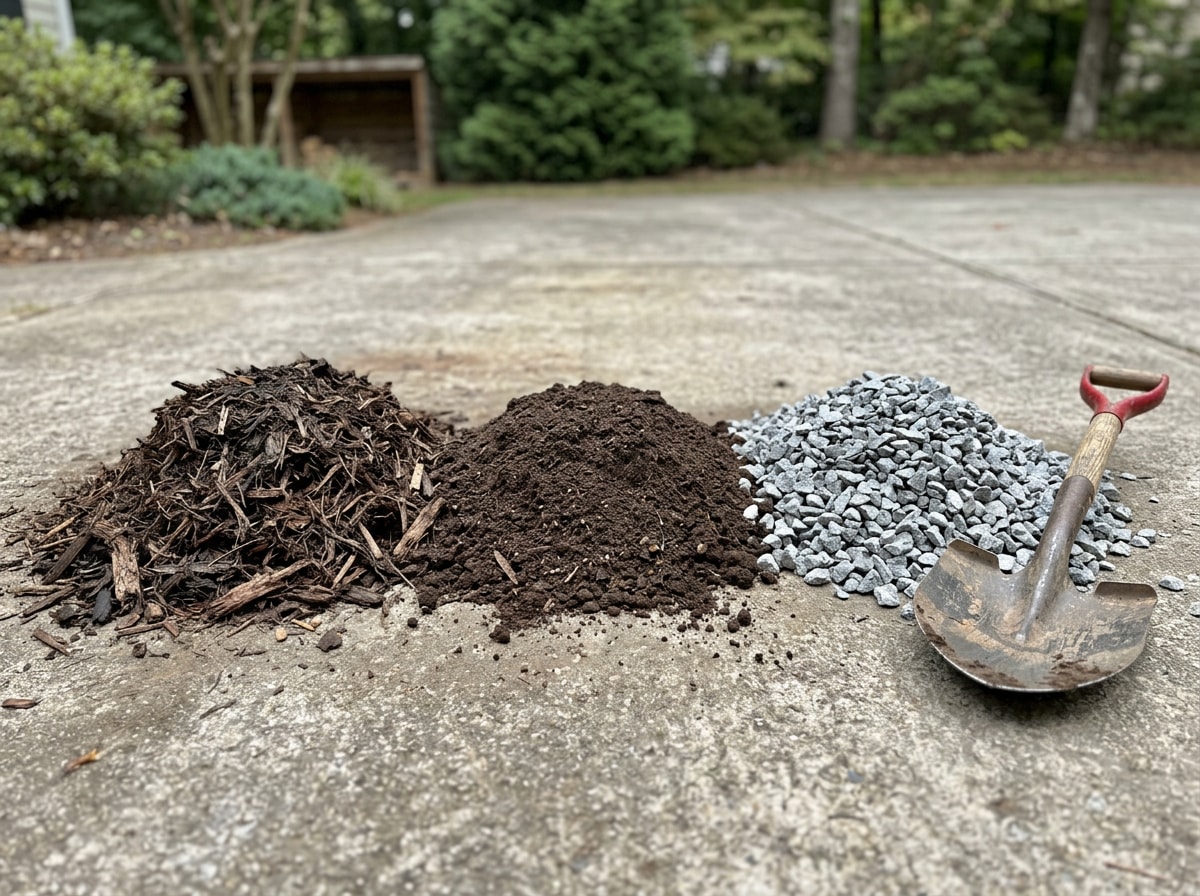
Brown and black shredded mulch dominate Nolensville yards because the color holds through a full season of Tennessee heat. Pine bark fits naturalized, wooded beds better. The University of Tennessee Extension recommends keeping mulch at a moderate depth rather than piling it deep against stems and trunks, since excess depth blocks oxygen exchange at the root zone. Most plants are sensitive to the depth of mulch, and more than 4 inches restricts soil oxygen exchange with the roots. Two to three inches is the sweet spot for weed control without smothering roots.
Topsoil & Fill Dirt
Topsoil and fill dirt look similar on a pallet but do different jobs. Topsoil is screened, nutrient-rich material meant for lawn establishment, new sod, and garden beds. Fill dirt is denser and cheaper, and it's meant for grading and elevation changes, not for planting into.
Gravel & Crushed Stone
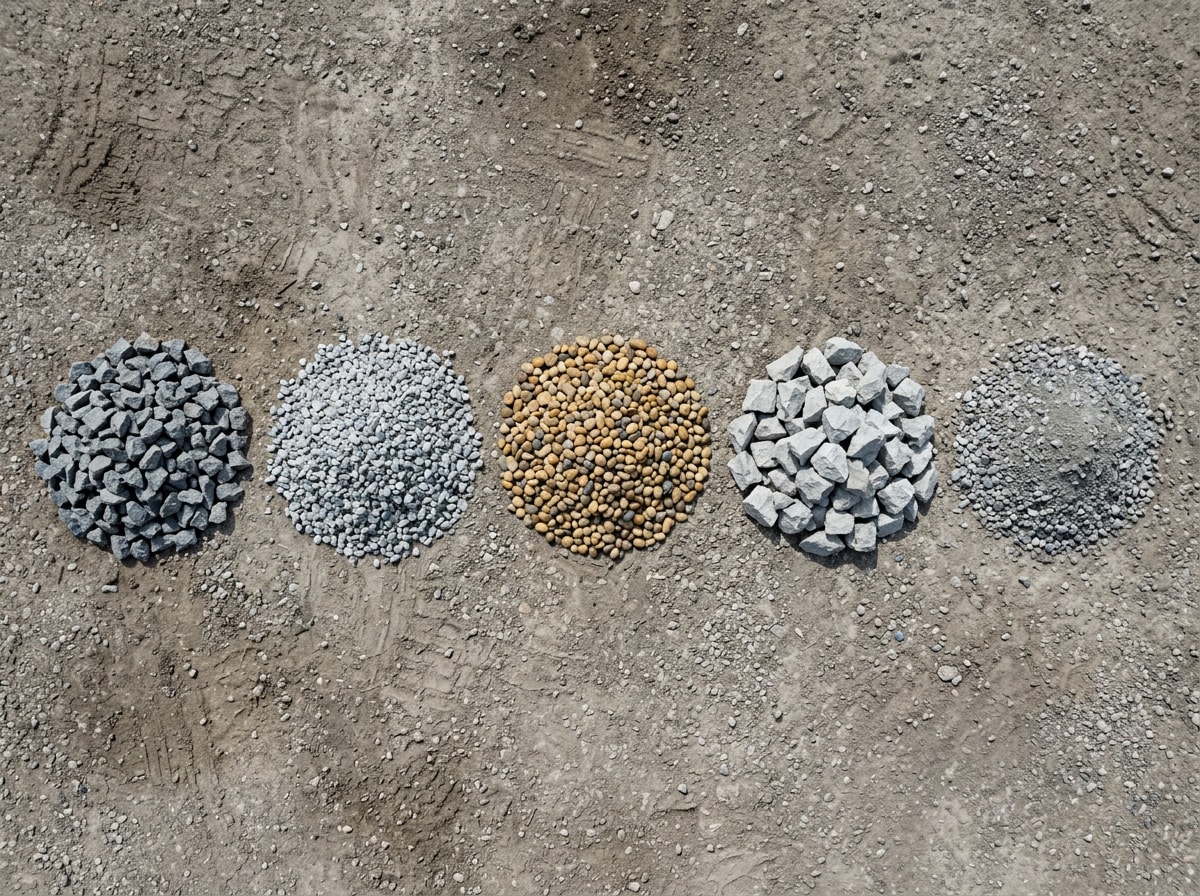
Stone size determines the job it can do. Angular, crushed stone locks together under load; smooth pea gravel does not, so it's reserved for decorative, low-traffic areas.
| Material | Typical Size | Best Use |
|---|---|---|
| Pea gravel | 3/8" smooth | Decorative beds, patios |
| #89 / 3/8" crushed stone | 3/8" angular | Walkways, paver base |
| #57 stone | 3/4"-1" angular | Driveways, drainage, footers |
| 3/4" crushed stone | 3/4" angular | Driveway base, backfill |
| 1 1/2" stone | 1.5" angular | Erosion control, drainage swales |
Tennessee's own aggregate classifications come from TDOT's materials specifications, which define sizes like "#57" and "#467" by sieve gradation rather than a rough description on a yard sign. If you want the technical breakdown behind those size numbers, the state's aggregate specification documents lay out the exact gradation tables.
Sand
Mason sand suits masonry work and paver joints. Coarser fill sand works under patios and play areas. Most bulk sand orders for Nolensville projects are sold and delivered by the ton.
Compost
Compost enriches thin or clay-heavy soil before planting. Blending it into topsoil at planting time improves drainage and feeds new lawns and beds through their first season.
Retaining Wall Block, Pavers & Boulders
Retaining wall block, pavers, and landscape boulders add structure: walls, paths, and focal points. Stock and lead times vary more here than with loose bulk material, so confirm availability before you lock in a design.
How Much Material You'll Actually Need
Order by volume, not by guesswork. The math is simple:
- Multiply length x width x depth, all in feet.
- Divide the result by 27 to get cubic yards.
- Round up, not down. Running short mid-project costs more than ordering a little extra.
Example: a 20x10-foot bed at 4 inches deep needs roughly 2.5 cubic yards. If you're planning a bigger overhaul, our Backyard Landscaping Near Me in Nolensville, TN guide walks through typical bed and patio sizing before you ever call a supplier.
2026 Pricing Notes for Nolensville
Bulk pricing moves with fuel costs and quarry rates, so treat any number as a starting point, not a quote. As one example, a Nolensville-zip-code bulk ordering platform listed 2026 per-unit pricing starting near $58 for fill dirt and brown shredded mulch, and closer to $62 for 3/8-inch crushed stone. Yard pickup is almost always cheaper than scheduled delivery, and minimum order sizes vary by supplier, so confirm both before you commit to a load.
Nolensville's Clay Soil and Limestone: Why It Changes Your Material Choice
Much of Williamson County sits over shallow limestone bedrock with heavy clay topsoil, a combination that drains poorly compared to sandier ground farther west. When our crews trench for low-voltage lighting cable in Nolensville yards, we hit a hard limestone shelf more often than the surface soil suggests, sometimes within the first foot of grade. That same bedrock is why water tends to pool on plain pea gravel and uncrushed fill, instead of soaking through.
Angular drain rock and #57 stone perform better here because their interlocking edges create channels for water even when the clay underneath won't absorb it. Before you order anything for a drainage-sensitive area, it's worth checking your specific parcel against the USDA's Web Soil Survey, which maps soil type and drainage characteristics down to the property level.
Where Landscape Supplies and Outdoor Lighting Overlap
A lot of Nolensville projects combine both: a gravel path or paver patio with low-voltage path lights, or a fresh mulch bed with uplighting on a specimen tree. If you're coordinating material delivery with a lighting plan, loop in your lighting contractor before the mulch or gravel goes down. Fixture wiring and transformer runs are far easier to place in open, bare soil than after a bed or path is finished and compacted.
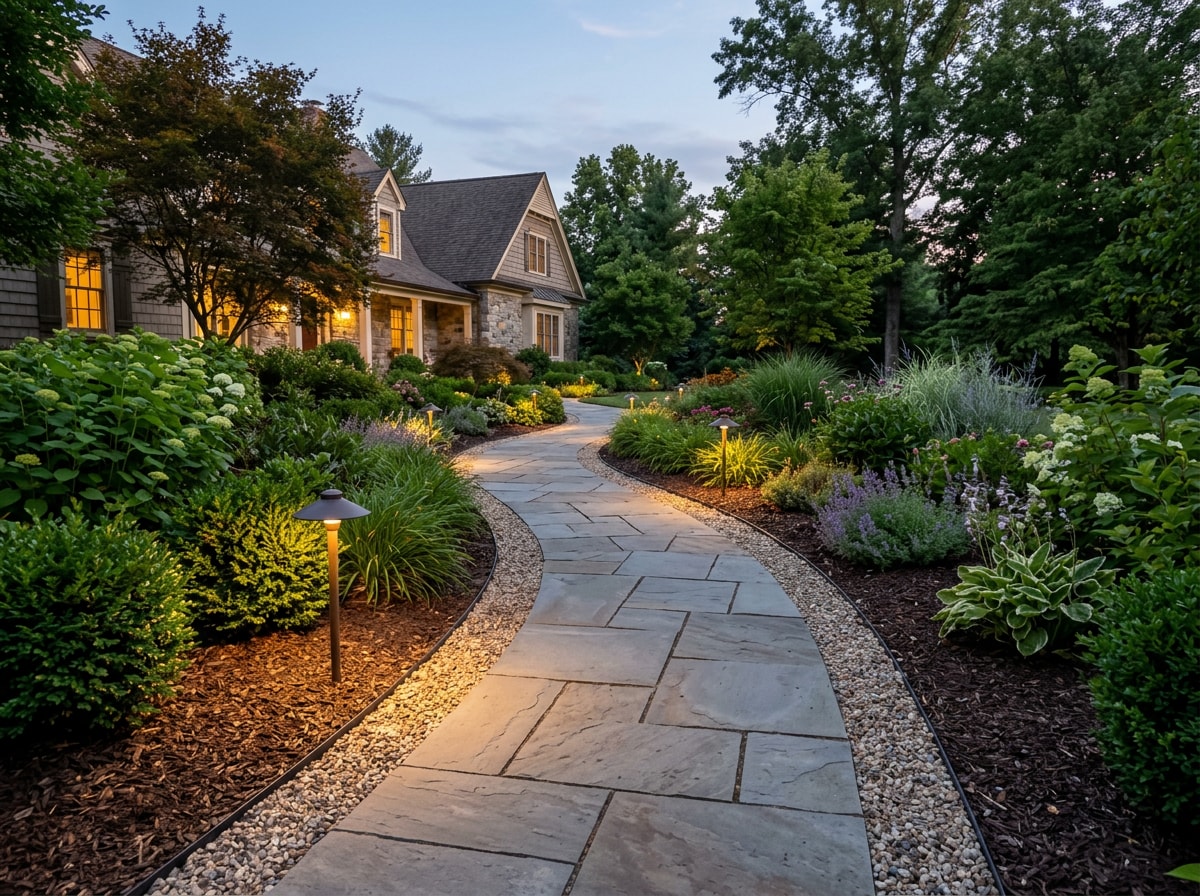
That sequencing matters for repair work too. If an existing bed has settled or a buried fixture went dark after a hardscape project, a lighting system inspection can confirm whether the wiring shifted with the material or the fixture itself failed.
Planning new beds, a gravel path, or a paver patio this season? Get a free estimate and we'll map a landscape lighting design or outdoor lighting installation plan around whatever material you choose, before the first truckload arrives.
Delivery & Service Areas Near Nolensville
Beyond Nolensville itself, including Historic Downtown, Rocky Fork, and the Nolensville Road corridor, we also work in the surrounding communities homeowners here often compare notes with:
Visit HomeLight Nashville to see our full service area and current project photos before you schedule anything.
FAQ
What types of landscape materials are available for delivery in Nolensville?
Topsoil, mulch, gravel, sand, compost, fill dirt, and hardscape materials like pavers, retaining wall block, and boulders. See the materials breakdown above for how each one is used.
Is delivery free in Nolensville, TN?
It depends on the supplier and the order size. Some yards waive delivery above a minimum order; others charge a flat fee regardless of volume. Always confirm the delivery charge before you place the order, not after.
How much material do I need for my project?
Multiply length by width by depth in feet, then divide by 27 for cubic yards. A 20x10-foot bed at 4 inches deep needs roughly 2.5 cubic yards. Round up to avoid a second trip.
How deep should topsoil be for a new lawn?
Four to six inches of screened topsoil is typical for new sod or seed. Thinner layers struggle to hold moisture long enough for roots to establish, especially over Nolensville's clay subsoil.
What's the best material for drainage in Nolensville's clay soil?
Angular drain rock and #57 stone outperform rounded gravel because their sharp edges interlock and create channels for water, even where clay underneath won't absorb it. Pea gravel and smooth fill tend to pool water on the surface instead.
Can I use crushed concrete for my driveway?
Yes, for a base layer. Crushed concrete is a budget-friendly, lower-impact base material for driveways and parking pads. Skip it for a finished top layer or decorative applications where appearance matters.
Do home improvement stores offer bulk compost or mulch delivery?
Most big-box stores sell bagged compost and mulch for pickup, with limited bulk delivery options and higher per-yard costs than dedicated bulk yards. Local garden centers and bulk material suppliers are usually the better source for anything beyond a few bags.