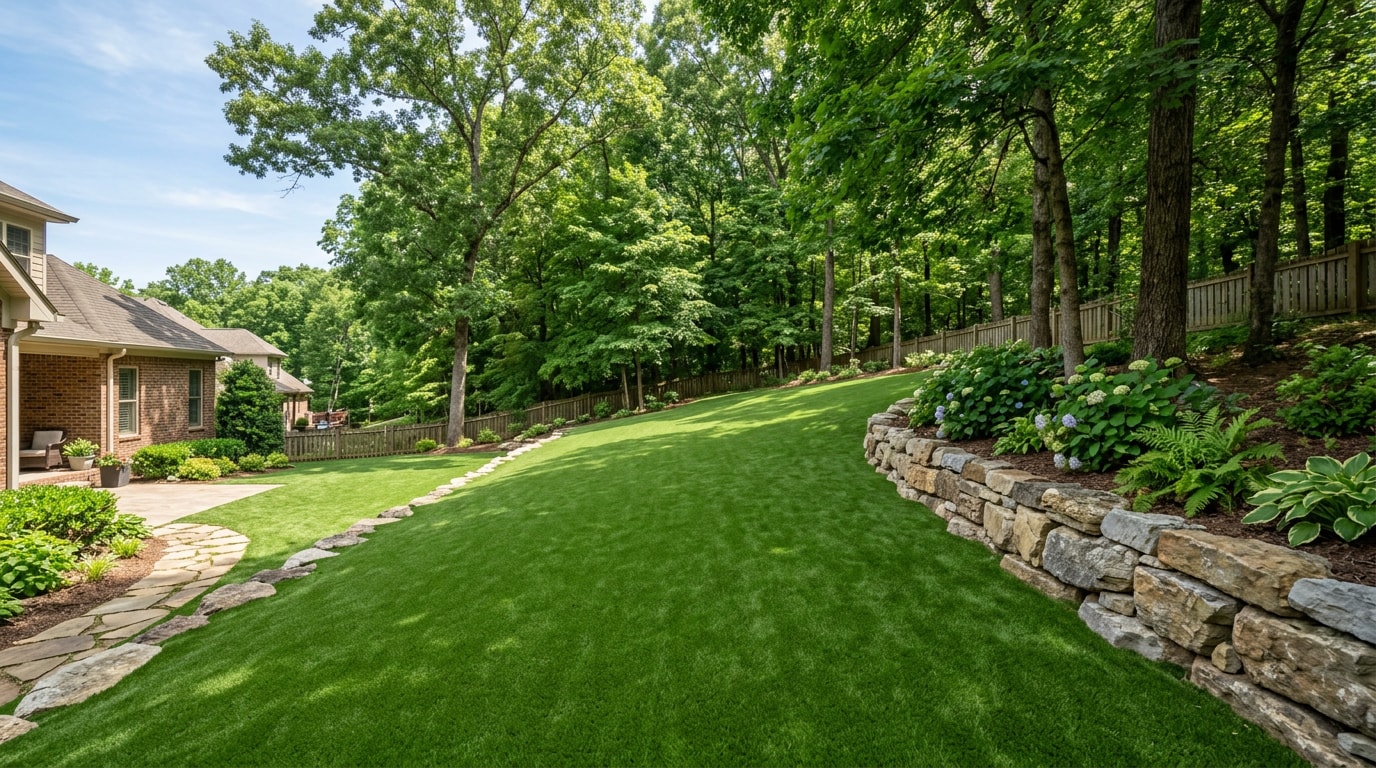
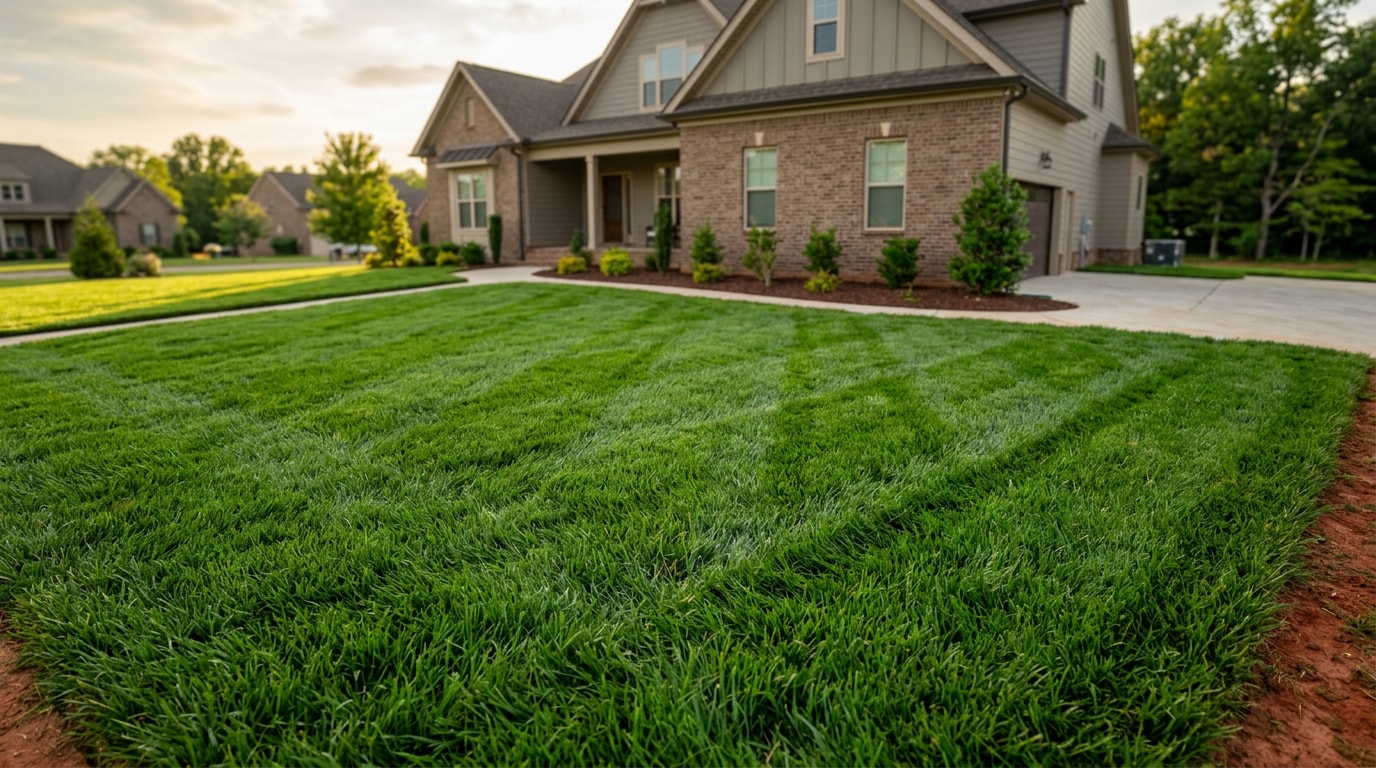
Lawn treatments in Thompsons Station, TN usually mean three services working on one schedule: fertilization, weed control, and disease prevention, layered on top of the aeration and pest control that Williamson County's clay soil demands. Most national programs apply the same calendar everywhere in the country, which is exactly why they underperform on compacted, newer-construction lots here. This guide breaks down what a locally built program should include, when each treatment actually needs to happen, and what the research says about the parts of the pitch that get oversold.
After years spent walking Thompsons Station yards to scope landscape lighting installs, I've seen the same pattern on property after property: thin, stressed fescue over rock-hard clay that never got aerated, next to a neighbor's lawn on an identical lot that looks completely different because someone timed the treatments right. The soil doesn't care what brand is on the invoice. It cares about timing.
Lawn Treatment Programs in Thompsons Station, TN: Comparing Tiers
Local providers generally sell three escalating tiers. The entry tier covers fertilization and weed control. The middle tier adds aeration and overseeding. The top tier layers in fungicide rounds and insect control timed to the local hatch cycle.
| Tier | Core Services | Typical Visits/Year | Best For |
|---|---|---|---|
| Basic | Fertilization, pre-emergent, post-emergent weed control | 6-8 | Healthy, established lawns needing maintenance |
| Plus | Basic + core aeration and overseeding | 8-9 | Compacted clay lots, thinning fescue |
| Premium | Plus + fungicide rounds, grub/armyworm control | 10-14 | Lawns with disease history, heavy shade, or new sod |
If your lot is new construction, or you're seeing bare patches after the first summer, start at the Plus tier at minimum. Grading crews typically strip topsoil and backfill with subsoil and gravel, so the lawn is fighting compaction from day one. Get a free estimate and a provider should walk the property before quoting a tier, not just ask your square footage over the phone.
What Each Tier Actually Includes
A full-season plan isn't a handful of mowing-adjacent extras. It's sequenced to the regional calendar, not a fixed national schedule:
- Pre-emergent herbicide — applied in late winter before soil temperatures trigger crabgrass and other summer annuals to germinate
- Post-emergent herbicide — spot-treats whatever broke through, with different chemistry for broadleaf weeds versus grassy weeds like dallisgrass and Johnsongrass
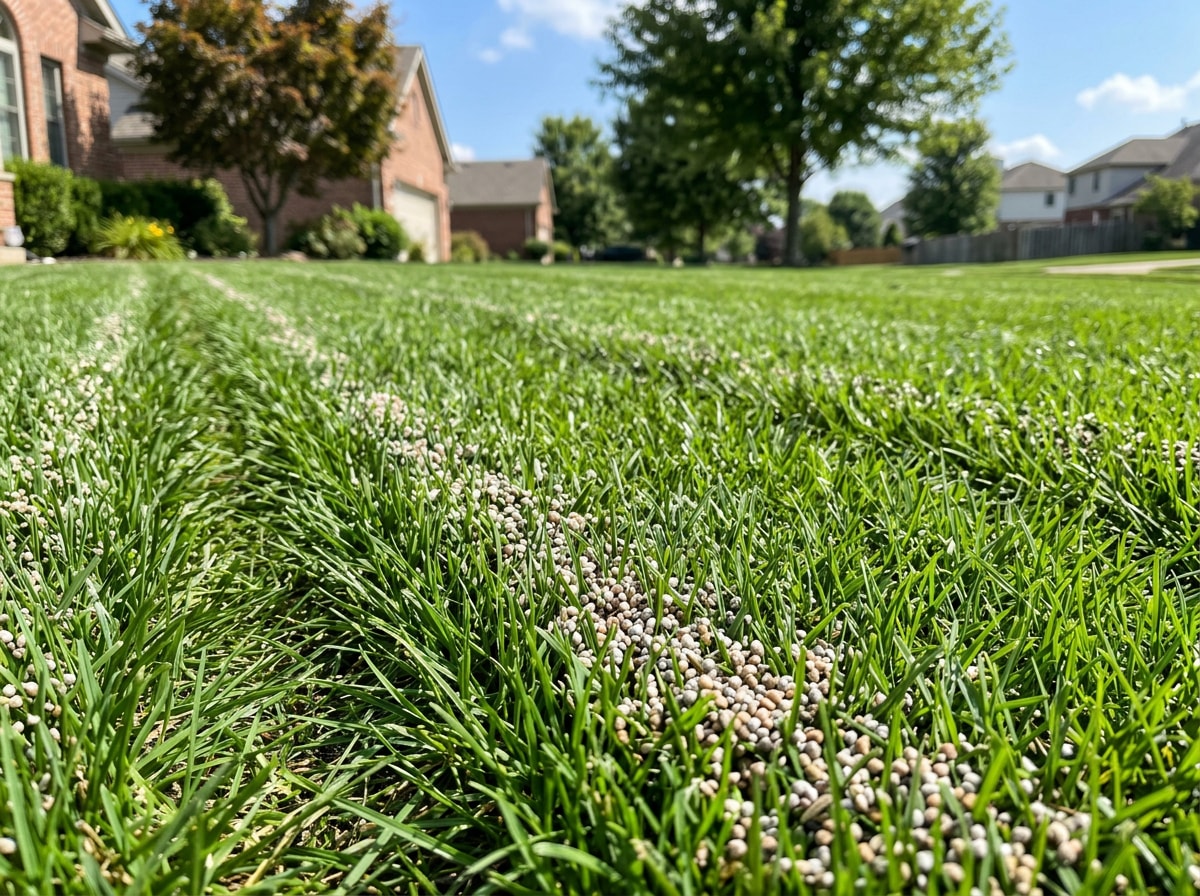
- Granular and liquid fertilization — slow-release nitrogen in spring, heavier feeding reserved for fall when fescue roots are actively building
- Fungicide rounds — timed to overnight temperature and humidity trends rather than a calendar date
- Grub and armyworm control — applied around early summer when local hatch cycles typically peak
Season-by-Season Treatment Calendar
Here's roughly how a Plus or Premium program maps onto the Middle Tennessee growing season:
| Window | What Happens | Why |
|---|---|---|
| Feb-March | Pre-emergent pass 1, granular fertilizer | Blocks summer annual weeds before germination |
| Late March-April | Pre-emergent booster, spot post-emergent | Backs up the first pass through peak weed emergence |
| May | First fungicide round, summer weed control | Gets ahead of disease pressure before heat arrives |
| June-July | Fungicide rounds 2-3, grub/armyworm watch | Peak heat and humidity mean peak disease and insect pressure |
| September-October | Core aeration, overseeding, slow-release fall fertilizer | Cool soil and air give new fescue seed its best shot before winter |
| Winter | Dormant inspection, soil test | Catches issues before the spring cycle restarts |
Core Aeration and Overseeding
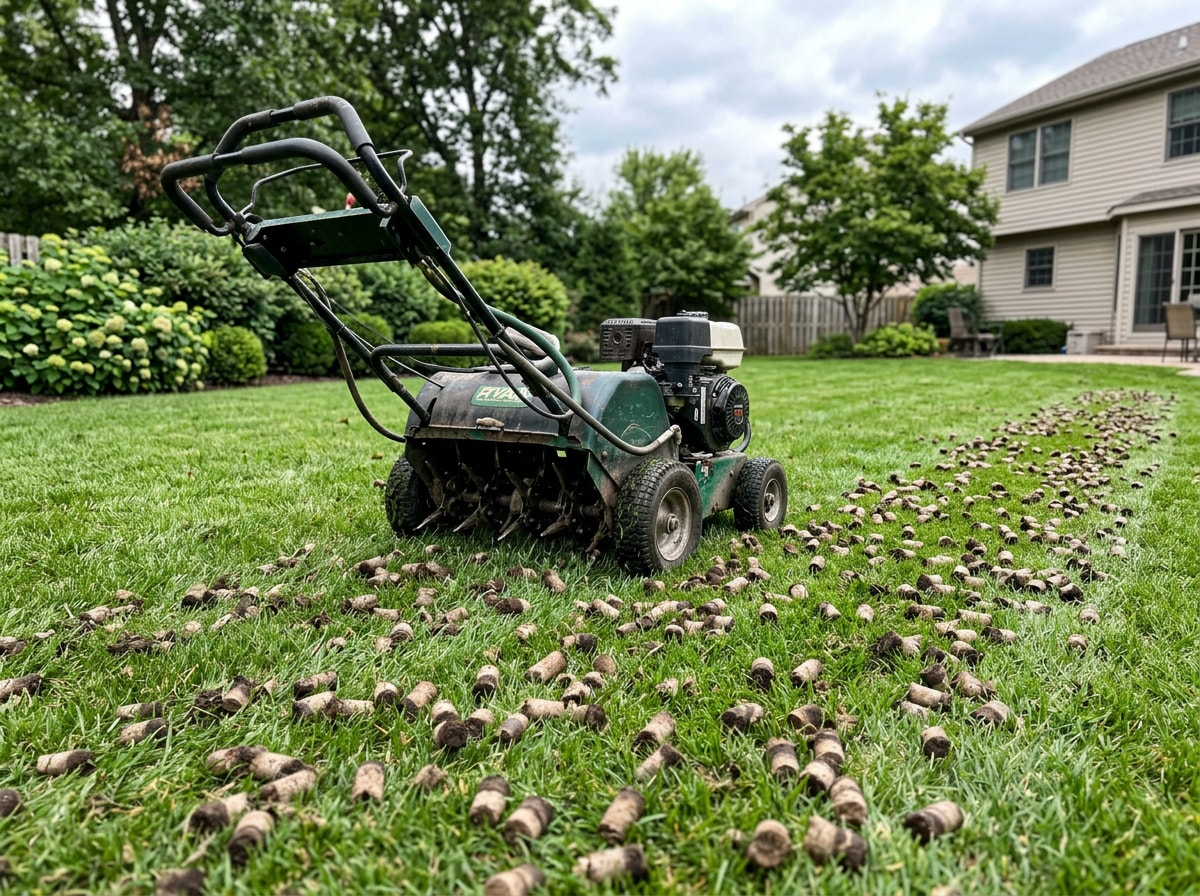
Core aeration pulls small soil plugs out of the lawn, relieving compaction so air, water, and nutrients can reach grass roots. In the clay common around Thompsons Station, soil particles pack tightly enough that root development stalls within the top couple of inches. Fall is the standard window for pairing aeration with overseeding on cool-season fescue, since cooler air and still-warm soil give new seedlings their best shot before dormancy.
Skip aeration for a few years running and root systems stay shallow and drought-prone, which shows up as the first lawn on the block to go brown in a dry July. Mowing cadence matters here too; if you're also dialing in your cutting schedule, our lawn cutting guide for Brentwood covers how mowing height interacts with root depth on the same transition-zone turf.
Fungicide and Brown Patch: What the Research Actually Says
Plenty of local sales pitches treat preventative fungicide as non-negotiable for every lawn. The research is more nuanced than that. University of Kentucky Extension's plant pathology program notes that in an established, well-maintained lawn, fungicide sprays usually aren't necessary to control brown patch — cultural practices like mowing height, irrigation timing, and avoiding excess nitrogen do most of the work, and the turf typically recovers on its own once weather cools. Fungicide becomes genuinely important mainly in newly seeded lawns, where an outbreak during the first growing season can wipe out turf that hasn't established deep roots yet.
That said, Middle Tennessee's combination of summer heat and overnight humidity pushes disease pressure higher than the extension's baseline assumptions, which is part of why most Williamson County programs still build 3-4 preventative rounds into their established-lawn plans rather than waiting to react. The honest version of this trade-off: if your lawn is healthy, mowed correctly, and not overwatered, you can likely skip the upsell on fungicide some years. If it's newly seeded, shaded, or has a disease history, prevention is worth paying for.
Why Thompsons Station's Soil and Climate Change the Plan
Thompsons Station sits on clay soil typical of Williamson County, with long warm growing seasons and sudden storms that stress lawns on sloped lots. Many neighborhoods here are newer construction, where topsoil gets mixed with gravel and fill during grading. A program built for flatter, sandier regions elsewhere misses these local realities entirely. Our Thompsons Station area page has more on how we approach outdoor projects for this specific terrain.
Thompsons Station also sits in the transition zone, where cool-season and warm-season grasses can survive side by side on the same street. Tall fescue is adapted to a wide range of soil and climate conditions, which is why it dominates most residential lawns here, but warm-season turf still shows up on older properties and neighboring lots. That overlap directly affects when fertilization, weed control, and overseeding should happen, since a fescue lawn and a Bermuda lawn next door are on opposite clocks for most of the year.
We see the same soil and climate patterns across nearby Franklin and Brentwood properties, so a plan built for one of these towns generally transfers well to the others with minor timing adjustments.
What to Look for in a Lawn Treatment Provider
A few questions separate a program built for your lawn from a generic script:
- Does the technician hold current state pesticide applicator certification? Under EPA rules, anyone applying pesticides commercially must be certified, and most states require it regardless of whether the product is a restricted-use pesticide.
- Does the quote follow a site visit or soil test, or just a square-footage guess?
- Are fungicide and insect rounds itemized, or bundled as a mystery "premium" line?
- Does the provider leave a visit record (product, rate, coverage) after each application?
A healthy lawn also does a lot of the heavy lifting for curb appeal once the sun goes down. If you're planning any exterior upgrades alongside your treatment program, our landscape lighting design services are built around the same Williamson County terrain, and you can browse finished work on our projects page. Visit the HomeLight Nashville homepage for our full service area and offerings.
FAQ
How much does lawn care cost in Thompsons Station, TN?
Pricing depends on lawn size, grass type, and current condition, so a reliable provider runs a soil test or site visit before quoting rather than pricing off square footage alone. Request a free estimate for an accurate number on your property.
When should I start lawn treatments?
There's no single universal start date. Pre-emergent applications generally begin in late winter or early spring before soil temperatures trigger weed germination, while fungicide rounds typically start around May as disease pressure builds with summer heat and humidity.
Is aeration included in the program?
Aeration and overseeding are commonly quoted as an add-on rather than bundled into base programs, since not every lawn needs it annually. Soil compaction, grass type, and how long it's been since the last aeration usually determine frequency.
Do I need to be home for treatment visits?
No. Most providers text or notify before arrival, apply the treatment, and leave notes on what was done. Routine visits don't require homeowner presence.
How many lawn treatment visits does a Thompsons Station lawn need per year?
Most programs run 6-8 visits for basic fertilization and weed control, climbing to 10-14 visits for a premium plan that adds fungicide and insect control rounds through summer.
Do lawn treatment technicians need to be certified?
Yes. Federal law requires anyone applying pesticides commercially, including lawn fertilization and weed control technicians, to hold state pesticide applicator certification, and most states require it even for products that aren't restricted-use.